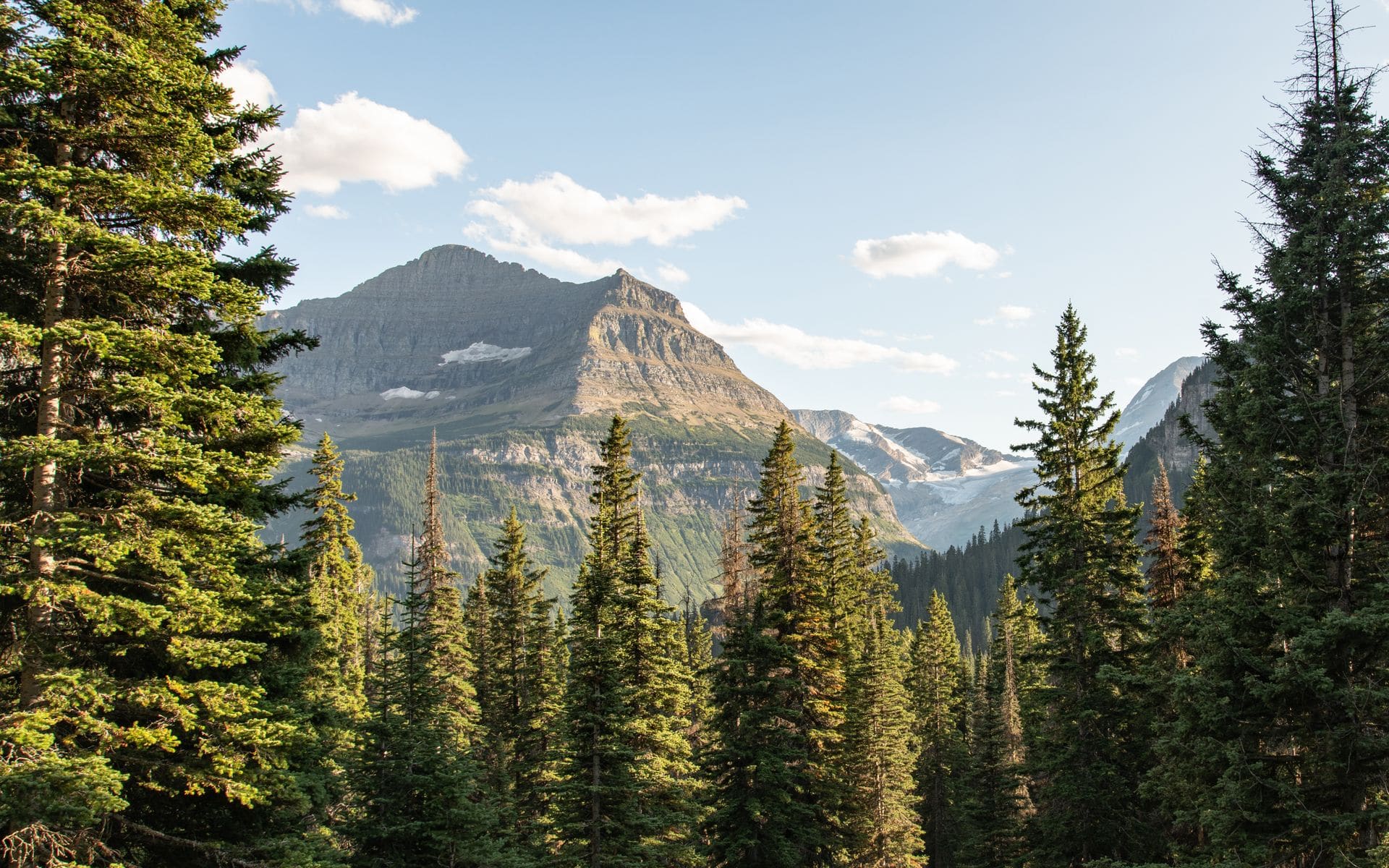
Why Visit Glacier Country
The northwest corner of Montana delivers more mountain scenery per mile than any other part of the state. Glacier National Park anchors the region with more than 700 miles of maintained trail and Going-to-the-Sun Road threading 50 miles through the park's center, one of the most dramatic paved drives anywhere in North America. Below the park, Flathead Lake spreads 28 miles long and up to 15 miles wide, the largest natural freshwater lake west of the Mississippi. West of the lake, Whitefish sits below a 3,000-acre ski mountain and has a walkable downtown with solid restaurants and gear shops.
The region is the most-visited part of Montana, and for good reason. It runs roughly 22,000 square miles from the Canadian border south through the Mission Valley and Flathead Valley to Missoula. Most of that space is national forest, wilderness, or tribal land. The towns are small, the drives between them are real, and the scale of the mountains here tends to reset people's expectations of what a mountain range looks like. If you've only got time for one region in the state, most people pick this one.
Top Places in Glacier Country
Glacier National Park is the centerpiece of the region and the draw most visitors organize their trip around. The west entrance at Apgar on US-2 is the most-used entry point. Going-to-the-Sun Road climbs east from there through ancient cedars, past Lake McDonald, up to Logan Pass at 6,646 feet, and down the east side to the town of St. Mary. Plan at least two full days to do the park any justice. The Many Glacier area on the northeast side, reached by a separate 12-mile drive from the St. Mary entrance on US-89, is its own destination and sees fewer people than the Logan Pass corridor.
Flathead Lake is about 30 minutes south of the Glacier area on US-93. In late July, farm stands along the east shore near Bigfork sell fresh Flathead cherries, a variety grown almost nowhere else in the Northwest, and they go fast. Wild Horse Island State Park sits in the middle of the lake and is reachable by private boat or charter from Dayton or Bigfork. It has a small population of wild horses, bighorn sheep, and bald eagles. The towns of Bigfork on the northeast shore and Polson on the south end are worth a few hours each.
Whitefish is the best full-service base for the west side of Glacier, about 30 minutes from the Apgar entrance. Downtown is a tight, walkable grid of restaurants, bars, and outfitters. Whitefish Mountain Resort is open year-round for skiing (November through April) and gondola rides (summer). The Whitefish Trail system offers more than 40 miles of interconnected bike and hike paths starting right at the edge of town.
Missoula anchors the south end of Glacier Country, about 2 hours south of Kalispell on US-93. Five valleys and three rivers converge here: the Clark Fork runs through downtown, the Bitterroot Valley heads south, and the Blackfoot River runs east through the valley made famous by Norman Maclean. The University of Montana gives the city a different energy than most Montana towns. Missoula is a practical base if you're splitting time between the Glacier area to the north and the Bitterroot or Blackfoot rivers nearby. Grizzly Hackle Fly Shop on Front Street is a reliable stop for anyone planning a float or wade trip on those rivers.
Kalispell, positioned between Whitefish and Flathead Lake, is the practical service hub for the region. Glacier Park International (FCA) is here, along with the regional hospital network and the major grocery and outdoor gear stores. It's not a destination town but it's where most logistics happen, and it consistently offers the area's most affordable hotels if you don't need walkable restaurants. The Desoto Grill on 1st Street is worth a stop for dinner if you're based here.
Top Things to Do
Going-to-the-Sun Road is the signature experience of Glacier Country, and no amount of photographs prepares you for driving it. The full 50-mile road runs from the Apgar area on the west to St. Mary on the east, climbing to Logan Pass and running along cliff faces with sheer drop-offs on the open sections. Allow 2 to 3 hours minimum with planned stops; budget more in July and August when traffic backs up at pullouts. Vehicles longer than 21 feet or wider than 8 feet (including mirrors) are barred from the Logan Pass corridor from mid-June through Columbus Day. Timed vehicle reservations apply during peak season, usually from early July through mid-September, though the NPS adjusts this year to year. Check nps.gov/glac for the current system before you book your trip.
Hiking in Glacier ranges from short paved walks to serious multi-day backcountry routes. The Highline Trail from Logan Pass is the most iconic: 7.6 miles one way along the Garden Wall with minimal elevation gain because the trailhead starts high. The Hidden Lake Overlook from the Logan Pass visitor center is 2.6 miles round trip and gives you views of the lake with minimal effort. For something less crowded, head to the Many Glacier area and do the Grinnell Glacier Trail, 7.6 miles round trip with around 1,600 feet of climbing, passing two lakes before reaching the glacier itself.
On Flathead Lake, kayaking and paddleboarding are easy to arrange through outfitters in Bigfork and Polson, with rentals running roughly $25 to $60 per hour depending on the craft. For fishing on the lake, Big Sky Fishing Charters operates out of Marina Cay Resort in Bigfork and runs guided trips for lake trout, pike, and walleye. The lake's surface can be 60 to 65 degrees Fahrenheit in August, so a wetsuit matters for anything beyond a short paddle. Whitefish Mountain Resort's gondola runs through the summer months and gets you to high-elevation views without hiking, a useful option on days when wildfire smoke or weather makes trail conditions unpredictable.
Glacier Country has several of the best small towns in Montana for spending an afternoon: Bigfork for arts galleries and the summer theater, Hamilton in the Bitterroot Valley for a less-touristy feel, and St. Ignatius in the Mission Valley for the historic mission church and the wildlife refuges along the Ninepipe corridor. The National Bison Range at Moiese, about 45 minutes south of Ronan on US-93, is a working wildlife refuge where you can drive a 19-mile route through open rangeland with free-roaming bison.
Where to Stay
Inside Glacier National Park, the historic lodges are the most sought-after beds in the region. Lake McDonald Lodge and Many Glacier Hotel are the two most iconic options; both open bookings around late January or February for the same summer through Xanterra's reservation system, and popular dates sell out within hours of opening. Expect to pay $250 to $450 per night for in-park lodge rooms in peak summer. If you missed the opening window, check back periodically for cancellations, as there is regular turnover.
Outside the park, Whitefish has boutique hotels including The Lodge at Whitefish Lake and vacation rentals in the $200 to $350 per night range in July and August, with prices dropping significantly after Labor Day. Columbia Falls, just 8 miles west of the park entrance on US-2, is a practical alternative to Whitefish that many visitors overlook: smaller lodges, shorter drive to the west entrance, and lower rates, generally $130 to $200 per night for mid-range options. Kalispell is the budget-friendliest option for name-brand hotels, also in the $130 to $200 range, though it adds 30 to 40 minutes to the park drive.
Camping inside Glacier is competitive. Apgar, Many Glacier, and Fish Creek campgrounds require reservations through Recreation.gov, and most sites book within minutes of becoming available 6 months in advance. Sprague Creek Campground (west side, walk-in, no RVs) has a smaller pool of first-come spots. If you're flexible, show up early on weekday mornings and check for same-day cancellations through the app. Outside the park, the Flathead National Forest has dispersed camping options that don't require reservations.
Getting There and Around
Glacier Park International (FCA) in Kalispell serves the region with direct flights from Seattle (SEA), Salt Lake City (SLC), Denver (DEN), Minneapolis (MSP), Portland (PDX), and several other hubs, with more seasonal routes in summer. FCA is a small airport with a limited car rental inventory: book your vehicle months in advance if you're arriving in July or August, because the counters sell out and last-minute rates spike. Missoula (MSO), about 2 hours south on US-93, is the other regional option and often has better flight availability from West Coast cities.
From Kalispell to the Apgar visitor center and west entrance of Glacier is roughly 35 minutes on US-2 east. From Whitefish, it's about 30 minutes. Getting from the west side of the park (Apgar) to the Many Glacier area on the northeast side requires driving out and around: exit via the east side on Going-to-the-Sun Road to St. Mary on US-89, then north to Babb and west on Many Glacier Road, a total of about 90 minutes. There is no shortcut through the middle of the park, and Going-to-the-Sun Road itself closes to oversized vehicles seasonally and closes entirely to all traffic in October.
A rental car is essential in Glacier Country. Rideshare exists in Whitefish and Kalispell but becomes unreliable farther east. Inside Glacier, a free hop-on hop-off shuttle runs along Going-to-the-Sun Road during peak season, connecting Apgar to Logan Pass and east to St. Mary. Using the shuttle lets you avoid the vehicle reservation requirement and skip the parking situation at Logan Pass, where the lot fills by 7 or 8 a.m. on busy days. If you stay near the Apgar area, the shuttle is genuinely the smarter way to experience the road.
Best Time to Visit Glacier Country
Mid-July through late September is the most reliable window for seeing the full region. Going-to-the-Sun Road typically fully opens in late June or early July, depending on snowpack, and sometimes not until the second week of July. The NPS posts road status at nps.gov/glac and updates it regularly. The full road closes again in mid-October with the first serious snow, though the lower portions stay open year-round for access to Lake McDonald.
September is worth particular attention. Vehicle reservations for Going-to-the-Sun Road end around mid-September, so you can drive it without the advance planning. Temperatures are cool but comfortable, highs in the 50s to low 60s at Logan Pass, and crowds drop noticeably after Labor Day. The larch trees at higher elevations turn gold from late September into October, and the elk rut is active through the month, with bulls bugling in the mornings and evenings near meadow edges. Late September in Glacier is genuinely one of the best times to visit Montana.
July and August are peak season, with the warmest temperatures and biggest crowds. The park sees its most visitors between July 4 and Labor Day. Book lodging, campgrounds, and in-park lodges as early as possible if you're targeting those weeks. Wildfire smoke can affect visibility and air quality in August and September, particularly in dry years. If you have respiratory concerns, check airnow.gov for Flathead Valley air quality in the week before your trip. Winter brings skiing at Whitefish Mountain Resort starting in November, and the lower park roads stay open for cross-country skiing near Apgar.
Frequently asked questions
Do I need a vehicle reservation to drive Going-to-the-Sun Road?
During peak season, typically from early July through mid-September, yes. The National Park Service runs a timed vehicle reservation system for the Going-to-the-Sun Road corridor. The exact dates and booking system change year to year, so check nps.gov/glac before your trip rather than relying on what applied in a previous year. Outside of peak season, no reservation is required. More about visiting Glacier National Park.
How far is Whitefish from Glacier National Park?
Whitefish is about 30 minutes from the park's west entrance at Apgar on US-2. It's the closest town with a full range of restaurants, hotels, and outdoor outfitters, and it's served by Amtrak's Empire Builder line. That said, you'll still need a rental car to get around once you arrive, since the park's shuttle doesn't extend to Whitefish.
Can I visit Glacier National Park and Flathead Lake in the same trip?
Yes, and most people do. Flathead Lake is about 30 minutes south of the Glacier area on US-93. A common routing: 2 to 3 days in Glacier, then drive south to Bigfork or Polson for a day on the lake, then continue south to Missoula or head east toward Bozeman and Yellowstone Country. The drives are straightforward and the towns are worth the stops.
What's the best base town for visiting Glacier National Park?
Whitefish is the best overall base for the west side: good restaurants, the widest lodging selection, and about 30 minutes to the park entrance. Columbia Falls, 8 miles closer to the west entrance, is quieter and often cheaper and is worth considering if you want to keep the park drive short. For the Many Glacier and east side, most people still base out of Whitefish and drive the 90 minutes over, since the towns near the east entrance have very limited services.