How We Picked
Montana has more skiable terrain than most people realize, spread across the northern Rockies and the central ranges. We ranked these resorts by terrain variety, vertical drop, snow reliability, and how easy they are to reach from Montana's main airports: BZN in Bozeman, FCA in Kalispell, BIL in Billings, MSO in Missoula, and HLN in Helena. Big crowds and big names don't automatically win. Bridger Bowl beats many mid-size destination resorts in the West on pure snow stats. Red Lodge Mountain is a genuinely solid choice if you're driving up from Billings. We included every publicly accessible lift-served ski area in the state worth planning a trip around.
A few ground rules on this list: all seven resorts rent equipment on-site, all are family-accessible, and none currently require timed-entry reservations for lift access. Prices below are labeled estimates based on publicly available window rates and are likely to change year to year. Book online in advance whenever possible for lower prices. Check each resort's website in October or November for opening-day announcements, since that varies by snowpack year. For hotels and lodges near each resort, the directory has options organized by town.
Big Sky Resort
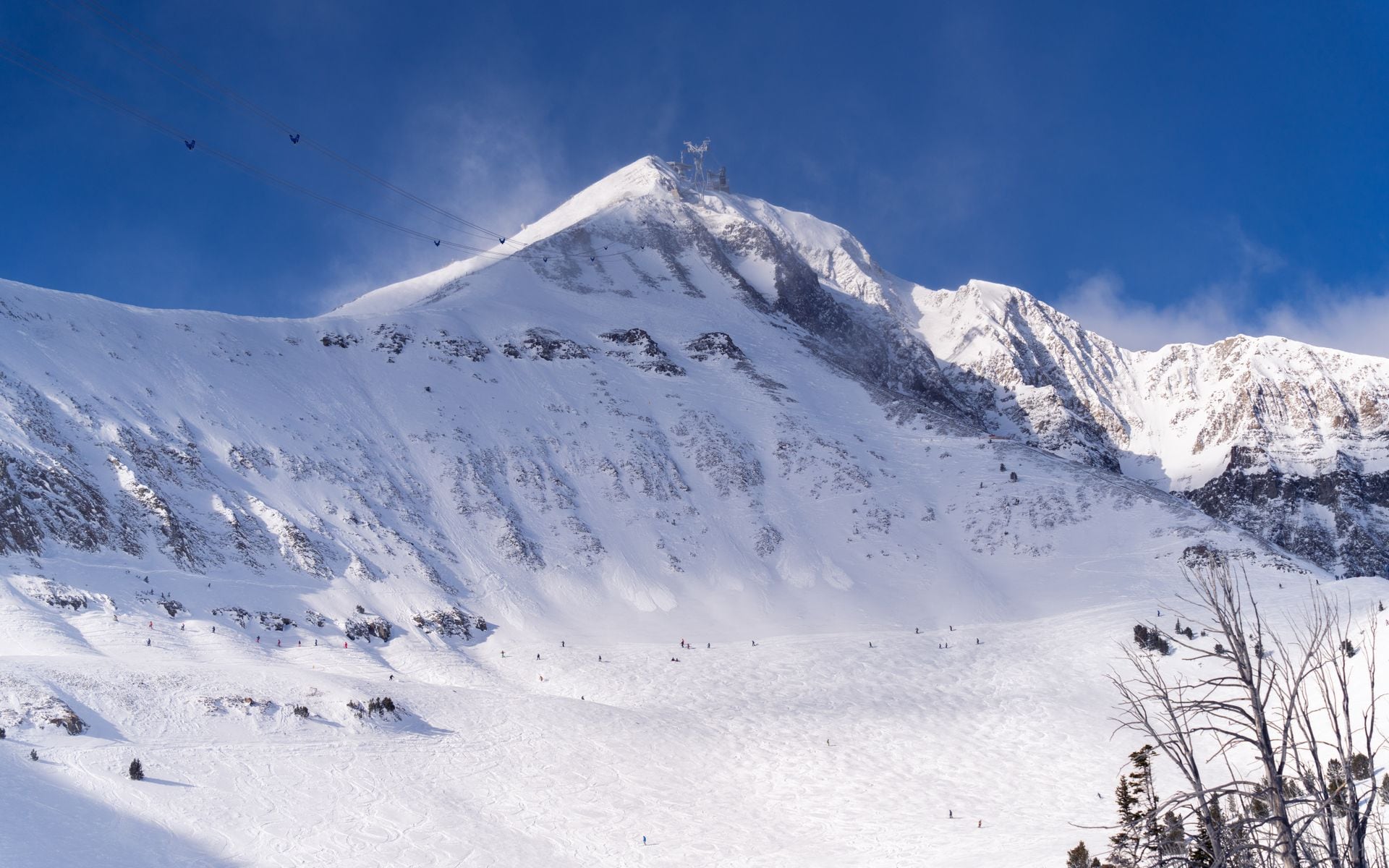
Big Sky Resort anchors the south end of the Gallatin Canyon on US-191, about 45 miles south of Bozeman. With more than 5,800 acres of skiable terrain, 36 lifts, and a tram reaching Lone Peak at 11,166 feet, it consistently ranks among the largest ski areas in North America by acreage. The vertical drop is 4,350 feet. That number matters: very few resorts on the continent can offer a run that long, and when the snow is right, you earn it.
Lift ticket prices run roughly $130 to $220 per day at the window (estimate). Book online weeks or months ahead and you can pull that number down significantly. Lodging at the base village ranges from ski-in/ski-out condos to full-service hotels, but peak weeks around Christmas, New Year's, and Presidents' Day sell out months in advance. From BZN, the drive south on US-191 takes about 50 to 60 minutes. Yellowstone's North Entrance at Gardiner is another 90 minutes south, which makes a winter Yellowstone day trip possible if you tack a day onto your ski trip. Big Sky is also the starting point for anyone interested in pairing winter skiing with summer adventures in the Gallatin Canyon.
Whitefish Mountain Resort
Whitefish Mountain Resort sits above the town of Whitefish in northwest Montana, about 25 miles east of Glacier Park International Airport (FCA). The mountain covers more than 3,000 acres across 105 named runs, with a vertical of 2,353 feet. Snow quality here is generally reliable from mid-December through March, aided by the resort's position at the edge of the Columbia Valley weather system, which delivers consistent snowfall when other Montana mountains are waiting on the next storm cycle.
What sets Whitefish apart from a pure resort standpoint is the town below it. Downtown Whitefish has independent restaurants, bars, and lodging that feel lived-in rather than resort-constructed. Day passes run roughly $90 to $160 (estimate) depending on the day and advance purchase window. Whitefish Mountain Resort is the closest full-service ski area to Glacier Country, and many skiers who first discover northwest Montana in summer make a point of returning in winter to ski the mountain they drove past on the way to the park. Families tend to appreciate the combination of wide groomed green runs on the lower mountain and legitimate expert terrain up top.
Bridger Bowl
Bridger Bowl sits 16 miles north of Bozeman on Bridger Canyon Road. It's a nonprofit ski cooperative with over 2,000 acres, a vertical of 2,600 feet, and a designated steep-skiing zone called the Ridge at the top of the mountain that holds some of the most serious expert terrain in the northern Rockies. When a low-pressure system rolls through and drops a foot of light snow on the north face, Bridger's skiing quality rivals anything in the region.
Lift tickets are dramatically lower than Big Sky. Expect roughly $55 to $90 per day (estimate), which is an outlier value for a ski area with this much vertical and this kind of snow record. Because the drive from downtown Bozeman is under 30 minutes, Bridger also works as a half-day option if you're in town for other reasons. The parking lot fills by 9 a.m. on powder days, so plan to arrive early or consider the shuttle from Bozeman on busy days. Beginners are welcome, but Bridger skews toward advanced and expert terrain in a way Big Sky doesn't.
Red Lodge Mountain
Red Lodge Mountain is about 60 miles southwest of Billings on US-212, climbing into the Beartooth Range outside the former coal-mining town of Red Lodge. The resort has roughly 1,600 acres, 70 runs, and a vertical of 2,400 feet. Crowds are consistently light by Montana standards, and lift lines rarely form except on holiday weekends. The drive from Billings Logan International (BIL) takes about an hour.
Red Lodge the town is genuinely worth stopping in. It has a well-preserved turn-of-the-century downtown, a few local breweries, and lodging that runs considerably cheaper than a resort village. Day passes run roughly $60 to $100 (estimate). One thing worth knowing: the Beartooth Highway, which connects Red Lodge to Cooke City and the northeast entrance of Yellowstone, closes at the high summit from roughly mid-October through late May. You can't drive through to Yellowstone in winter from here, but if you're planning a summer Beartooth road trip, Red Lodge makes an excellent base on the Montana end.
Great Divide
Great Divide is a 1,600-acre ski area about 22 miles north of Helena on the Continental Divide itself, which puts it in a position to catch storm systems from multiple directions. The mountain has a vertical of 1,500 feet and 141 named runs. It doesn't have the national profile of Whitefish or Bridger, but it's a well-run local resort with genuinely varied terrain.
Lift tickets at Great Divide run roughly $45 to $75 per day (estimate), making it among the most affordable full-day skiing in Montana. Helena Regional Airport (HLN) is the closest air access, served by flights from a handful of western hubs including Salt Lake City and Seattle. If you're road-tripping through southwest Montana and want a winter ski day without committing to a destination resort, Great Divide fits the schedule well. It's also a reasonable base for anyone interested in pairing a ski day with a visit to Montana's state parks in the shoulder seasons around it. Browse hotels and lodges in Helena to find overnight options 22 miles down the road.
Showdown Montana
Showdown Montana operates in the Little Belt Mountains near Neihart, about 65 miles southeast of Great Falls. It covers around 640 acres with a 1,400-foot vertical and 36 runs. Lift tickets hover around $50 to $60 per day (estimate), making it one of the most affordable days of skiing in the entire state. It's a classic small Montana ski hill: rocky, steep in spots, no resort village, and almost entirely attended by people who grew up nearby.
Getting there from Great Falls International Airport (GTF) takes about 75 minutes on US-89 South. The lodge at the base is straightforward, serving hot food and coffee without the trappings of a ski resort. Showdown attracts almost no destination skiers, which means the mountain is often quiet even on weekends in January. If you're building a central Montana itinerary that threads through Great Falls and the Missouri River breaks, a Showdown ski day in winter adds a dimension most visitors miss entirely.
Lost Trail Powder Mountain
Lost Trail sits on the Montana-Idaho border in the Bitterroot Range near Sula, about 90 miles south of Missoula on US-93. The resort straddles two states, with most of the skiable acreage on the Montana side. The mountain covers roughly 1,800 acres with a vertical of 1,800 feet and about 40 named runs. The snowfall pattern here is notably different from the east side of the Rockies: Lost Trail intercepts Pacific moisture moving through the Bitterroot corridor, producing a lighter, drier powder more often than its modest elevation alone would suggest.
Lift tickets run roughly $45 to $75 per day (estimate). The nearest real lodging base is Missoula, about 90 minutes north on US-93. Lost Trail doesn't have the terrain scale to anchor a full ski week on its own, but as a two-day trip from Missoula or a powder day for serious skiers who find Whitefish too crowded, it delivers. The drive south from MSO is straightforward and scenic through the Bitterroot Valley, passing through Hamilton and Darby before climbing to the resort.
Quick Comparison
If you want the biggest terrain and the most vertical, Big Sky Resort. If you want a real town to sleep in with solid skiing above it, Whitefish Mountain Resort. If you're flying into BZN and want strong skiing at a reasonable price, Bridger Bowl is 16 miles from the airport. If you're based in Billings, Red Lodge Mountain is an hour southwest. If you want central Montana skiing without the price tag, Showdown or Great Divide. If you're chasing powder on a budget near Missoula, Lost Trail is worth the 90-minute drive south.
Montana's ski season runs from roughly mid-December through late March at most resorts, with Bridger Bowl and Big Sky sometimes holding terrain into April in good snow years. All seven resorts offer ski and snowboard rentals. After the slopes, if you're looking to extend the western experience beyond ski runs, Montana's dude ranches offer winter programming at several properties, including snowshoeing, sleigh rides, and cross-country trails. Montana skiing is also easy to combine with a broader Montana travel itinerary if you're spending more than a long weekend in the state.
Frequently asked questions
What is the biggest ski resort in Montana?
Big Sky Resort is the largest ski area in Montana and one of the largest in North America, with more than 5,800 acres of terrain and a tram reaching Lone Peak at 11,166 feet. It sits about 45 miles south of Bozeman on US-191, roughly an hour from Bozeman Yellowstone International Airport (BZN).
Is Bridger Bowl or Big Sky better for a first-time Montana skier?
For a first Montana ski trip, Big Sky has a more extensive beginner and intermediate terrain network and a larger resort infrastructure. Bridger Bowl costs considerably less (roughly $55-90 per day vs. $130-220 at Big Sky) and is closer to Bozeman, but its terrain skews toward advanced and expert. If budget matters, Bridger is the better value. If ease and terrain variety matter more, Big Sky is the safer choice.
Which Montana ski resort is closest to Glacier National Park?
Whitefish Mountain Resort is the closest lift-served ski area to Glacier Country and Glacier National Park. The resort is about 25 miles east of Glacier Park International Airport (FCA) in Kalispell and roughly 30 minutes from the park's west entrance near Apgar. Glacier itself has no ski area.
When do Montana ski resorts typically open and close?
Most Montana ski areas open in mid-December and run through late March or early April, depending on snowpack. Big Sky and Bridger Bowl sometimes extend into April in strong snow years. Lost Trail and Showdown typically follow similar windows but can close earlier if the snowpack thins. Check each resort's website in October or November for opening-day projections.
Do Montana ski resorts require reservations?
As of the current season, none of the seven Montana ski resorts listed here require advance timed-entry reservations for lift access. You can buy a lift ticket at the window. That said, popular powder days at Bridger Bowl and Whitefish Mountain Resort fill parking lots early. Buying your ticket online in advance saves money and speeds up arrival.