Overview
Montana Fish, Wildlife and Parks designates nine rivers as blue-ribbon fisheries, a classification reserved for streams with exceptional cold-water trout habitat and fishing quality. The best-known are the Madison, Gallatin, and Yellowstone, all running through south-central Montana within a few hours of Bozeman. The Missouri below Holter Dam near Craig is one of the country's premier tailwater fisheries, producing consistent hatches and large rainbow trout from March through October. The Big Hole River in southwest Montana holds the lower 48's only remaining self-sustaining population of fluvial Arctic grayling, which adds a conservation angle serious anglers find worth the detour. For context on how fishing fits into a broader Montana trip, the Montana Travel Guide covers the state across all its regions.
The Blackfoot River, running east of Missoula through ponderosa pine canyon, carries a reputation built partly by Norman Maclean's writing, but the fishing earns it independently: native westslope cutthroat and brown trout in a free-flowing river with good public access along US-200. The Bitterroot Valley south of Missoula adds more miles of brown and rainbow trout water. The Flathead River system serves anglers who want to pair fishing with time near Glacier. Each river has its own character, and choosing one depends on where you're based and what species you're chasing.
What to Expect
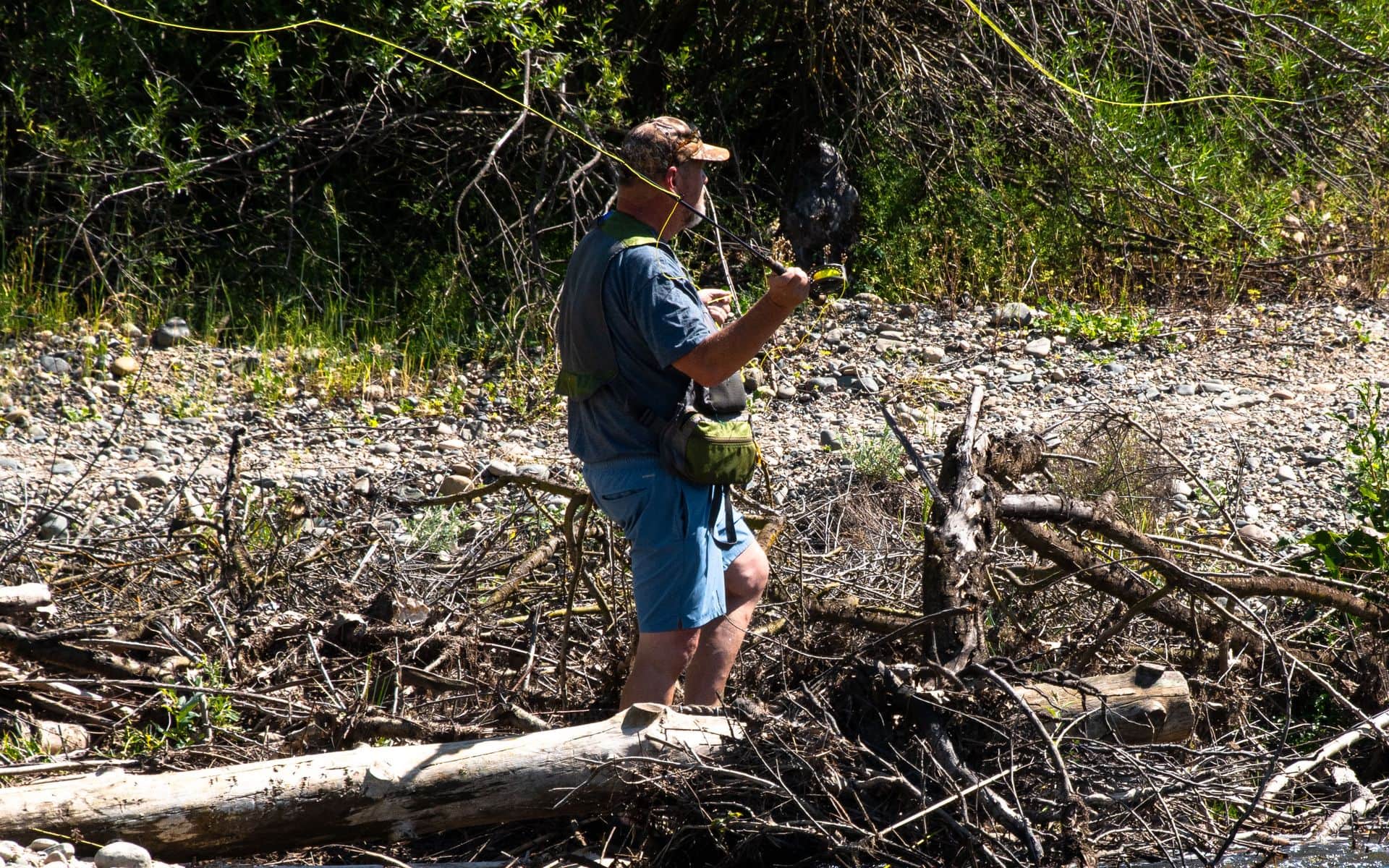
Most Montana fly fishing comes down to two formats: wading a stretch of river on foot, or floating 10 to 15 miles in a drift boat with a guide at the oars. Wade fishing lets you slow down and work a single run with patience. Drift boat trips cover far more water in a day and are forgiving for anglers whose casting still needs work, since the guide positions the boat to set up most presentations. You'll be in the boat for the bulk of the day, pulling over to wade specific runs that look productive. The Gallatin Canyon between Big Sky and Bozeman is also a popular corridor for whitewater rafting, though the canyon section is typically waded rather than floated for fishing due to the technical water.
Montana rivers are catch-and-release on most designated stretches, and barbless hooks are required on some sections, including parts of the Madison and certain Yellowstone tributaries. These are not stocked fish: wild trout in cold water require accurate presentations. Bring waders year-round, even in July, since water temperatures on most rivers stay in the 50s even on hot afternoons. A licensed guide makes the biggest difference for first-timers and for visitors with limited days on the water, cutting down the learning curve on what hatches are working and where fish are holding that specific week.
Best Season
The main fishing window runs June through October, with peak conditions from mid-June through September. Snowmelt runoff keeps most freestone rivers high and off-color through April and much of May, particularly on the Gallatin and Yellowstone. The Madison tends to clear faster: Quake Lake, formed by a 1959 earthquake, acts as a natural settling basin and keeps the river below it running clearer earlier in the season than most. By mid-June, conditions stabilize and summer hatches begin. The salmon fly hatch, one of the marquee events in western fly fishing, typically runs on the Madison from late June into early July, though the exact timing shifts year to year based on water temperature and elevation. It draws big brown trout to the surface. The Pale Morning Dun and Trico hatches follow from July through September, offering technical dry-fly fishing that rewards patience and precise presentation.
September and October are underrated months. Water temperatures cool, fish feed aggressively before winter, and the summer crowds thin out considerably. The Yellowstone River through Paradise Valley, from Livingston south toward Gardiner, fishes particularly well in September. Towns like Ennis on the Madison and Livingston on the Yellowstone are solid bases for fall trips; Yellowstone River Outfitters in Livingston runs guided wade and float trips through the fall brown trout push, and guide operations across both towns stay active well into October. For towns worth spending a night in fishing country, see Best Small Towns in Montana. Winter fishing narrows to a few tailwaters: the Missouri near Craig and the Beaverhead near Dillon hold up when freestone rivers ice over.
Typical Costs (Estimates)
Guided half-day wade trips run an estimated $250 to $375 per person for a private guide covering four to five hours on the water. Full-day guided drift boat trips run an estimated $475 to $625 per person, including lunch and flies. Most outfitters book two anglers per drift boat; going as a pair keeps per-person costs toward the lower end. Summer peak rates (July and August) typically land at the top of these ranges. Confirm whether flies, waders, and gear are included when you book, since policies vary by outfitter.
A Montana nonresident fishing license costs roughly $15 for 2 days, $50 for 10 days, or around $110 for an annual license (2025 estimate; confirm current fees at Montana Fish, Wildlife and Parks before your trip). Gear rentals, including waders, wading boots, and a rod-and-reel setup, run approximately $40 to $70 per day at most full-service fly shops. Montana Angler in Bozeman and Grizzly Hackle Fly Shop in Missoula are well-regarded full-service shops where you can rent gear, pick up flies matched to the specific river you're fishing, and get a same-week conditions report. Madison River Fishing Company in Ennis fills that role on the Madison, with comparable shops in Livingston and West Yellowstone.
How to Book
Match your river to your base. Flying into BZN and staying in Bozeman puts you within range of Madison River trips out of Ennis (roughly 70 miles south on US-287) and Gallatin Canyon wade trips within 45 minutes of downtown. Gallatin River Guides, based in Big Sky, covers that canyon corridor and books both wade and float options. Flying into MSO puts you 30 minutes from the Blackfoot and Bitterroot. For the Missouri near Craig, plan to stay in Helena or Great Falls: Craig sits about 30 miles north of Helena on US-89 and has several small lodges built specifically around fishing access. Book your guide 60 to 90 days ahead for July and August dates. The best outfitters on high-demand rivers fill their summer calendars well before peak season, often by February or March.
Browse licensed Montana outfitters organized by river region in our Fly Fishing Outfitters directory. Look for guides holding current Montana fishing guide licenses and outfitter bonds, and ask whether they specialize in wade trips, float trips, or both. If you're combining a fishing day with national park visits, the 5 Days in Montana itinerary shows how to fit a guided river day alongside Glacier or Yellowstone without burning too much drive time. If you're planning a winter visit when fishing slows on most rivers, Skiing and Snowboarding at Big Sky Resort or Whitefish Mountain Resort is what most Montana visitors pivot to from December through March.
Frequently asked questions
Do I need a fishing license to fly fish in Montana?
Yes. Every angler 12 and older needs a valid Montana fishing license. Nonresident options include a 2-day license (estimate $15), 10-day license (estimate $50), or annual license (estimate $110). You can buy online through Montana Fish, Wildlife and Parks before your trip or pick one up at a local fly shop when you arrive. Many outfitters include the license cost in their guided trip pricing, so ask when booking.
What is the best river for fly fishing in Montana?
It depends on where you're staying and what experience you want. The Madison near Ennis is the most consistent producer with good float and wade options across three seasons. The Missouri below Holter Dam near Craig is arguably the most technically rewarding, with dense hatches and large rainbow trout in a tailwater that fishes well even in spring and fall when freestone rivers are blown out. The Blackfoot near Missoula is a good choice if you want solitude and scenery without the Madison's crowds. See our Best Fly Fishing Rivers in Montana guide for a full breakdown by river.
When is the salmon fly hatch on the Madison River?
The salmon fly hatch typically runs on the Madison from late June into early July, but the exact timing shifts year to year based on water temperature and how quickly the season warms. It progresses upstream as water warms, so the lower river often hatches before the upper stretches. Call a fly shop in Ennis or West Yellowstone the week before your trip for the most accurate read on where the hatch is and what sections are fishing best.
Can beginners fly fish in Montana?
Yes, and a guided drift boat trip is one of the better setups for a beginner. The guide handles the boat positioning, sets up presentations, and coaches casting technique throughout the day. Most outfitters in Montana also offer beginner-friendly half-day wade options that simplify the variables. You do not need your own gear: most outfitters include rod, reel, waders, and wading boots in the trip price, so you can show up with just a license and appropriate clothing.