Overview
Montana's national park story runs on two anchors. Glacier National Park covers more than a million acres of the Northern Rockies in the state's northwest corner, right along the Canadian border. Yellowstone National Park sits mostly in Wyoming, but Montana holds three of its five vehicle entrances: the North Entrance at Gardiner (open to cars year-round), the West Entrance at West Yellowstone, and the Northeast Entrance through Cooke City. Which gate you use shapes the Montana landscapes you drive through and the towns you sleep in, so the distinction matters for planning.
Beyond those two, the state has several other federal units worth knowing about. Little Bighorn Battlefield National Monument sits about 65 miles southeast of Billings near Crow Agency, right off I-90, marking the 1876 battle where the U.S. Army fought the Lakota, Cheyenne, and Arapaho. Bighorn Canyon National Recreation Area straddles the Montana-Wyoming border south of Hardin and offers 71 miles of reservoir shoreline for boating and flatwater fishing. Grant-Kohrs Ranch National Historic Site near Deer Lodge preserves a working cattle operation that dates to the 1860s gold rush era.
If serious hiking is your reason for coming, most of the big trail mileage in Montana lives inside these parks. The Hiking and Backpacking page covers trailhead-level detail. If a guided float on the Madison or Gallatin is on your list, Fly Fishing covers outfitters and the best rivers. And if you are still early in your planning, the Montana Travel Guide lays out the full picture.
What to Expect
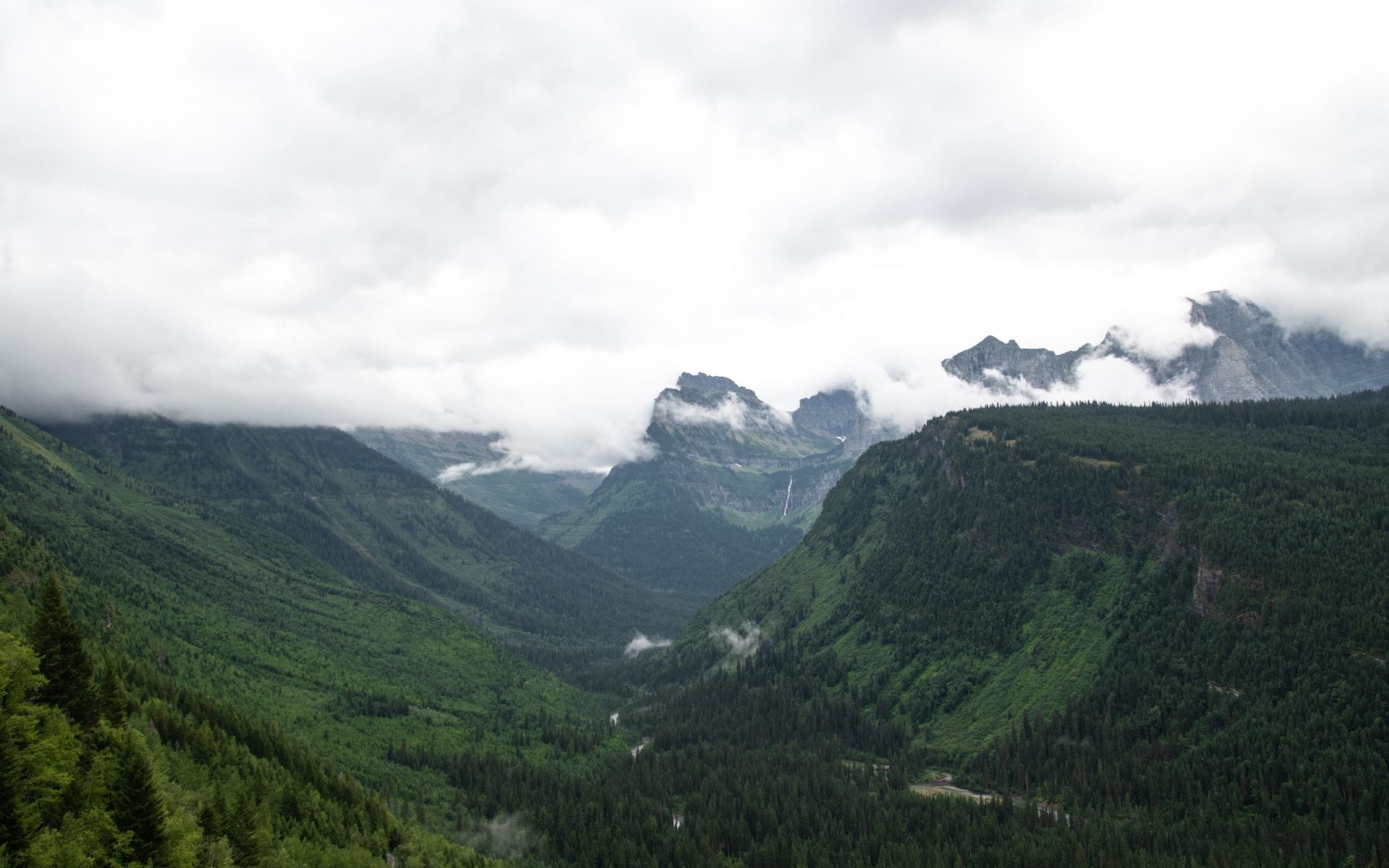
Glacier National Park feels different depending on which side of the Continental Divide you enter. The west side, accessed through Apgar and along Lake McDonald, has old-growth cedar forest and a gentler valley floor. The east side, especially Many Glacier and Two Medicine, puts you in more open terrain with bigger peaks and active wildlife corridors where grizzlies move down from the high country in late summer. Vegetation changes quickly with elevation, and you can go from dense conifer forest to exposed tundra in a few thousand feet of trail gain.
Going-to-the-Sun Road is the 50-mile highway that crosses the park over Logan Pass at 6,646 feet and links both sides of Glacier. It is a serious piece of engineering on the edge of a cliff, and large RVs and trailers are prohibited from driving the middle section between Avalanche Creek and the St. Mary entrance. Logan Pass parking fills by 8 or 9 a.m. on peak summer days, sometimes earlier. The park runs a free shuttle system along the road from late June through early September, and parking once at Apgar or St. Mary and riding the shuttle to your trailhead is the smarter move than showing up at Logan Pass at midday and finding the lot full.
Yellowstone is bigger than most visitors expect. The grand loop road is about 142 miles, and covering the whole park takes several days. The geothermal features draw the biggest crowds: Old Faithful, Grand Prismatic Spring, and Mammoth Hot Springs all sit along the western and northern parts of the loop. The section most people miss is the northeast corridor through Lamar Valley, reached from the Northeast Entrance via Cooke City. At dawn, this open valley is one of the best spots on the continent to watch wolves, bison, and bears. Visitors who drive in from the North Entrance at Gardiner or the West Entrance at West Yellowstone often skip Lamar entirely because it requires doubling back.
Both parks sit in serious bear country. Glacier and Yellowstone both have grizzlies; Yellowstone also has black bears. Carry bear spray, know how to deploy it, and store food in hard-sided containers or bear boxes at every campsite. The NPS posts current bear activity by area on both parks' websites, and checking those reports before each day's hike is worth two minutes of your morning.
Best Season
Peak summer, late June through August, gives you the widest access. Going-to-the-Sun Road usually opens fully in late June or early July depending on snowpack, and closes when the first serious snow hits in October. The Beartooth Highway connecting Red Lodge to Yellowstone's Northeast Entrance typically opens in late May and closes around mid-October. Plan around those openings if either road is a priority.
September into early October is a strong window for both parks. Crowds drop hard after Labor Day. Temperatures in Glacier run in the 40s-70s Fahrenheit during the day, and the larch trees on higher trails turn gold starting in late September, a display that most summer visitors never see. In Yellowstone, elk rut runs through most of October; bulls are bugling and active in the meadows near Madison and in the Lamar Valley.
Glacier's vehicle reservation system for Going-to-the-Sun Road has changed format year to year in recent summers. In some seasons, permits have been required only for morning and midday entry windows, while late afternoon arrival (after 3 or 4 p.m.) was open without a reservation. This matters if you want to time a Logan Pass hike for golden-hour light. Check the NPS site for the current year's rules before you finalize your dates or book a hotel around a specific arrival schedule.
Winter closes most of Glacier to vehicles, though the Apgar visitor area near the west entrance stays accessible. Yellowstone's interior is reachable in winter by oversnow travel only. The North Entrance at Gardiner stays open to cars year-round, and snowcoach and snowmobile tours run from Gardiner, Mammoth, and West Yellowstone to Old Faithful and the geyser basins. It is a quieter, more expensive experience than summer, but wolf and bison activity in Lamar Valley in January and February is consistent.
Typical Costs
Entry fees are consistent across both parks (estimates, subject to change by NPS): a 7-day vehicle pass runs about $35. The America the Beautiful Annual Interagency Pass costs around $80 and covers entrance to all federal lands for one year. If you are hitting both Glacier and Yellowstone in one trip, or if you visit national parks at least twice a year, the annual pass pays for itself on a single Montana trip.
Campgrounds inside the parks range from roughly $10 per night for basic sites to around $35 per night for sites with electrical hookups. The most popular campgrounds in Glacier, including Many Glacier, Apgar, and Fish Creek, fill months in advance through recreation.gov. Yellowstone's in-park lodges and cabins run roughly $120 to $350 per night depending on property and room type. Old Faithful Inn and the other historic lodges open reservations in winter for the following summer and sell out within days.
Guided park tours from outfitters based in gateway towns run roughly $75 to $150 per person for a half day and $150 to $350 per person for a full day (estimates). Boat tours on St. Mary Lake in Glacier and on some Yellowstone lakes are in the $30 to $50 per person range (estimates). Tour Operators and Guides lists licensed outfitters working both parks. Hiring a guide is especially worthwhile for wildlife-focused mornings in Lamar Valley, where knowing where to position before dawn makes a real difference.
How to Book
Start with lodging and campsite reservations before you plan anything else. Yellowstone lodges and the most-requested campgrounds open on recreation.gov months before the season, and the best spots disappear fast. In Glacier, Many Glacier Campground and the west-side campgrounds at Apgar and Fish Creek behave the same way. Build your itinerary around your confirmed bookings, not the other way around.
For Glacier vehicle reservations, check nps.gov/glac before you buy your annual pass or book a hotel around a specific drive time. The reservation type and window have shifted between seasons. Understanding the current system could change whether you fly into Kalispell (Glacier Park International, FCA) a day earlier or later.
Airport logistics: Bozeman Yellowstone International (BZN) is the busiest and best-connected airport for Yellowstone access, about 90 minutes by car to the North Entrance at Gardiner and about 90 minutes to the West Entrance at West Yellowstone. Glacier Park International in Kalispell (FCA) is about 30 minutes from the west side of Glacier, and Missoula International (MSO) adds another 2 hours of driving but opens up more flight options. A 5 Days in Montana itinerary that includes one of these parks typically routes through one of these airports as the anchor.
If you are figuring out where to base yourself, the small towns around both parks each have their own personality. Best Small Towns in Montana covers Whitefish and Whitefish Mountain Resort near Glacier, Gardiner and Livingston near Yellowstone's north gates, and West Yellowstone near the west entrance. Each has different dining, lodging, and access trade-offs worth knowing before you commit.
Frequently asked questions
Do you need a reservation to enter Glacier National Park?
Timed vehicle reservations for the Going-to-the-Sun Road corridor and some other areas in Glacier have been required during peak summer hours in recent seasons. The system changes year to year. Check nps.gov/glac well before your trip for the current-year requirements. Late afternoon entry windows have sometimes been available without a reservation, which is useful if your schedule is flexible.
When does Going-to-the-Sun Road fully open?
Usually late June or early July, depending on snowpack. Crews plow from both ends toward Logan Pass, and the opening date varies by several weeks from year to year. The road typically closes with the first major snow in October. The NPS posts current road status at nps.gov/glac.
How do you get to Yellowstone from Montana?
Montana has three of Yellowstone's five entrances. The North Entrance at Gardiner is open to cars year-round and puts you directly at Mammoth Hot Springs. The West Entrance at West Yellowstone (about 90 minutes south of BZN airport) is seasonal and the most heavily trafficked. The Northeast Entrance through Cooke City connects to Lamar Valley via the Beartooth Highway, which is only open seasonally from roughly late May to mid-October.
Can you do both Glacier and Yellowstone in one trip?
Yes, but the drive between them is long: Glacier's west entrance to Gardiner on Yellowstone's North Entrance is roughly 6 to 7 hours. Most people who do both in a single trip either fly into one airport and out of another, or plan at least 10 to 14 days to avoid rushing. A dedicated 5-day itinerary typically focuses on one park rather than both.
Is an America the Beautiful pass worth it for a Montana trip?
If you are visiting both Glacier and Yellowstone, the annual pass (around $80) pays for itself: two 7-day vehicle passes would cost $70, and the annual pass adds all other federal lands for the full year. Buy it at the first park entrance you reach and use it at the second.