Overview
Montana is big. Bozeman to Whitefish, your base for Glacier, is about 390 miles and 6 to 6.5 hours of actual drive time. This itinerary builds that distance into the trip rather than fighting it, running south to north over five days with a one-way car rental. Book the car early: summer rental inventory in Montana is tight, and prices in June through August spike if you wait until the last few weeks. If you want more time in each place, the 7 Days in Montana itinerary adds two more days and is a better fit if you feel rushed here.
This is a Montana Travel Guide itinerary built for a first-time visitor who wants to see the parks, a real Montana town, and a stretch of open highway. Expect full days and early mornings, especially around Glacier. None of these days are back-to-back hard slogs, but this is not a schedule that leaves room for sleeping in or taking long afternoons off. The payoff is that you come away with a genuine picture of the state rather than a single-destination trip.
Day 1: Arrive in Bozeman
Bozeman Yellowstone International (BZN) has direct service from most major hubs, including Los Angeles, Denver, Seattle, Chicago, and New York. Pick up your rental car at the terminal (the lot is a short walk from baggage claim) and head into downtown Bozeman, about 10 minutes away on West Main Street. Check into your hotel and then head to the Museum of the Rockies, on the Montana State University campus at the south end of town. It holds one of the largest T. rex collections in the world and has strong exhibits on Montana geology and paleontology. Give it 2 to 3 hours. It is a legitimate anchor, not a tourist afterthought.
Downtown Bozeman's core runs along Main Street between Grand and Rouse. There are good coffee shops, breweries, and dinner spots within walking distance of most hotels. If you land with daylight to spare, Peet's Hill is a small city park one block south of the hospital with a short trail that gives you a 10-minute climb and a clear view of the Bridger Range to the north. Not a big hike, but it orients you to the landscape quickly. Go to bed early: Day 2 is a long one.
Day 2: Gallatin Canyon and the Edge of Yellowstone
Head south from Bozeman on US-191 through the Gallatin Canyon. The road follows the Gallatin River for nearly 50 miles, through canyon walls that close in quickly south of town. The canyon itself is one of the most striking river-corridor drives in the state, and the Gallatin runs high and fast through early July from snowmelt. Outfitters based in the canyon run whitewater trips when the water is up. Big Sky Resort is at the end of the canyon, about 45 miles and 50 minutes from Bozeman. Worth a short stop for the Lone Peak views from the resort base area, but don't linger too long: you're heading another 50 miles south to West Yellowstone.
West Yellowstone, Montana, sits right at the park's west entrance. The town runs almost entirely on Yellowstone visitors, with a year-round population of under 1,500. Enter the park and drive the 14 miles to Norris Geyser Basin, the hottest and most geologically active part of Yellowstone. From Norris, the 5-mile side road to Midway Geyser Basin passes the Grand Prismatic Spring, which is best viewed from the overlook trail on the hillside above (not from the boardwalk at water level). That perspective shows the full ring of orange, yellow, and deep blue that makes it the most-photographed thermal feature in the park. Plan on 3 to 4 hours inside before driving back to Bozeman for the night (about 1.5 hours) or overnight in West Yellowstone if you want a morning in the park before driving north. If a deeper Yellowstone exploration is what you're after, the Glacier and Yellowstone Road Trip builds 3 to 4 full days around the park.
Day 3: Drive North to Whitefish
Today is a driving day: roughly 390 miles from Bozeman to Whitefish, taking 6 to 6.5 hours with a lunch stop. The standard route goes I-90 west to Missoula (about 200 miles, 2 hours 20 minutes of drive time), then north on US-93 through the Flathead Valley to Whitefish (another 80 miles, roughly 1.5 hours). Leave by 8am to arrive in Whitefish with afternoon light.
Missoula is the right place to stop for lunch. The Clark Fork River runs right through the center of town, and the Higgins Avenue corridor downtown has coffee, food, and a few walkable blocks. Give it 45 to 60 minutes and keep moving. North of Missoula, the terrain opens into the Flathead Valley, the Swan Range rises to the east, and the Mission Mountains come into view to the northwest. The farmland and small towns along US-93 have a different feel than the canyon country you drove through yesterday, and it's worth paying attention to the landscape as you go. Arrive in Whitefish by mid-afternoon. The downtown is small and walkable, anchored by the historic Great Northern Depot. Walk the main drag, check the weather forecast for tomorrow, confirm your Going-to-the-Sun Road reservation, and get to bed at a reasonable hour.
Day 4: Glacier National Park
Set your alarm for 6am. The Going-to-the-Sun Road timed vehicle reservation (required roughly late June through Labor Day) must be booked in advance on recreation.gov and is non-negotiable in peak season. If you could not get a driving reservation, the free park shuttle runs from Apgar Visitor Center near the West Glacier entrance all the way to Logan Pass and St. Mary on the east side. It is a fully usable alternative, not a consolation prize. Park at Apgar and ride up.
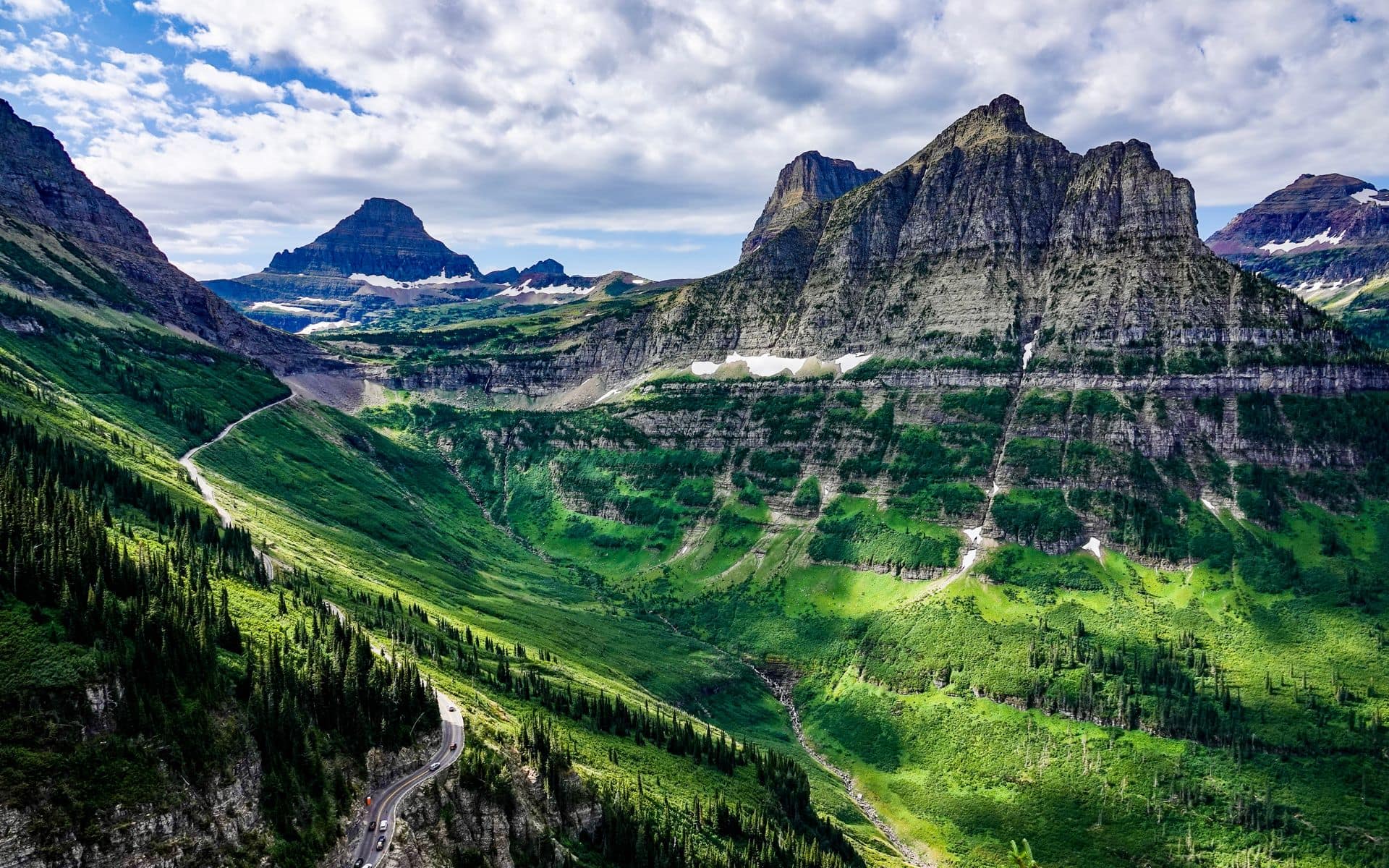
Enter through the West Glacier entrance, about 25 miles southeast of Whitefish on US-2. Stop at Lake McDonald first: it is 10 miles long, glacially carved, and has a clear bottom layered with smooth, mineral-stained pebbles in shades of red, green, and blue. The colors come from the metamorphic rocks unique to this part of the Rockies. Drive the Going-to-the-Sun Road up to Logan Pass at 6,646 feet. The Logan Pass parking lot fills before 9am in July and August even with reservations controlling road access, so earlier is better. From the pass, the Highline Trail runs north along the Continental Divide ridge with nothing but open alpine terrain on both sides. The first 2 to 3 miles are wide and well-graded, enough for a 2-hour out-and-back before the midday heat on exposed rock.
On your way back down, stop at Avalanche Gorge. The trailhead is at Avalanche Creek, about 15 miles from the West Glacier entrance. The trail is 2 miles round-trip and runs through a narrow red rock canyon with old-growth western red cedar and hemlock overhead. The gorge itself is a short, deep slot where the creek has carved through ancient rock over centuries. It is one of those Montana spots that rewards low effort disproportionately. You're back in Whitefish by late afternoon. Read more about what the Glacier Country region has beyond the park itself, including the Flathead Valley, Whitefish Mountain Resort, and the lake country to the south. For a full rundown of Montana's National Parks, including the three Montana entrances to Yellowstone, that page covers the basics.
Day 5: Flathead Lake and Departure
Leave Whitefish by 9am. Drive south on US-93 about 30 minutes to Polson at the north end of Flathead Lake. The lake is the largest natural freshwater lake west of the Mississippi, roughly 30 miles long and 15 miles wide. The drive down the west shore hugs the water closely for most of the way south. Wayfarers State Park, about halfway down the lake near the town of Bigfork, has a day-use area with a pebble beach. It is worth 30 minutes of actual time on the water: swimmable in July and August, with temperatures around 65 to 70 degrees Fahrenheit on the surface.
Glacier Park International (FCA) is in Kalispell, about 15 miles south of Whitefish. The airport has direct service to Denver, Seattle, Salt Lake City, Minneapolis, Phoenix, and Chicago, among others. The terminal is small and manageable, but plan to arrive 90 minutes before departure in summer when check-in lines are longer than you might expect for a regional airport. If your flight is in the afternoon, you have time to spend a proper hour at Flathead Lake before heading to the terminal.
Where to Stay
In Bozeman (Nights 1 and 2): Hotels cluster near downtown Main Street and along North 19th Avenue near the university. Budget $130 to $190 per night (estimate) for a reliable chain hotel and $200 to $300 for boutique options in July and August. Book 3 to 4 months out for summer dates.
In West Yellowstone (Optional Night 2): If you choose to overnight here instead of driving back to Bozeman, expect standard motel pricing in the range of $110 to $160 per night (estimate) in summer. Options are limited and book up, so plan ahead if this is part of your itinerary.
In Whitefish (Nights 3 and 4): Similar price range to Bozeman, roughly $130 to $200 per night (estimate) for a hotel. Vacation rentals through standard booking platforms are plentiful in the area and often work better for families or groups who want kitchen access.
Book These Ahead
Going-to-the-Sun Road timed vehicle reservations go on sale in the spring and sell out within minutes of release. Check recreation.gov starting in January for the current year's dates and system. You cannot book this the week before your trip in peak summer: it will not be available.
Rental cars in Montana in summer are genuinely hard to find if you wait past late winter. Lock in your one-way car from Bozeman (pick-up) to Kalispell (drop-off) 3 to 4 months ahead and verify the one-way drop fee in your quote before confirming. Glacier campgrounds, particularly Apgar and Fish Creek near the west entrance, fill up the day the reservation window opens in the spring.
If five days starts to feel tight as you read through this, it is. The itinerary works, but there is not much slack. Consider adding two more days: one for the east side of Glacier (Many Glacier area via US-89 and MT-49, which is a completely different landscape from the west side) and one more morning in Yellowstone's Lamar Valley for wildlife. That's the starting point for the 7 Days in Montana plan.
Frequently asked questions
Is 5 days enough to see both Glacier and Yellowstone?
Barely, and only if you treat one of them as a preview. This itinerary spends half a day at the western edge of Yellowstone and one full day at Glacier. You get a real taste of both but not a thorough experience of either. If you want two or three days at each park, the Glacier and Yellowstone Road Trip is built for that. It requires at least 8 to 10 days.
What airports should I use for a 5-day Montana trip?
Fly into Bozeman (BZN) and out of Kalispell/Glacier Park International (FCA). BZN has the best national connections and is the most convenient starting point for Yellowstone Country. FCA has direct service from Denver, Seattle, Salt Lake City, and Minneapolis. Booking a one-way rental between the two airports avoids retracing 390 miles of highway. If you must fly in and out of the same airport, BZN is the better choice and you can tighten the trip around either Yellowstone Country or Glacier.
Do I need a reservation to drive Going-to-the-Sun Road?
Yes, in peak summer. The timed vehicle reservation for the Going-to-the-Sun Road corridor (roughly late June through Labor Day) must be secured in advance through recreation.gov. If you cannot get a driving reservation, the free park shuttle from Apgar Visitor Center to Logan Pass is a genuine alternative, not a downgrade. Outside the reservation window, no permit is required to drive the road.
Where should I stay to have the best access to Glacier National Park?
Whitefish is the most practical base for the west side of Glacier. It's about 25 miles from the West Glacier entrance, has the most lodging options in the corridor, and has a walkable downtown for evening meals. Apgar Village (inside the park near the west entrance) has a small lodge and camping, but it books out a year in advance. West Glacier town, right outside the entrance, has a handful of lodges that are closer to the park gate but more limited in dining and services.