Why Visit Southwest Montana
Southwest Montana carries more history per mile than most regions in the state. The 1862 gold strike at Bannack launched Montana's territorial era, and within two decades, Butte had grown into one of the most productive copper-mining cities in the world. You can trace that arc in a single road trip: walk the weathered boardwalks of Bannack as a state park ghost town, drive through Butte's uptown historic district (a National Historic Landmark), and end the day in Helena, the state capital that grew out of an 1864 placer gold strike in a gulch that prospectors named Last Chance. Three cities, three chapters of Montana history, all connected by I-15 and a few hours of driving.
The rivers here are a separate story altogether. The Big Hole, the Beaverhead, and portions of the upper Madison all carry blue-ribbon trout designations, but the Big Hole stands apart even in that company. It is one of the only rivers in the lower 48 states where native fluvial arctic grayling still reproduce naturally, a population that has survived in this watershed while grayling have vanished from nearly every other river in the continental U.S. Southwest Montana also holds Missouri Headwaters State Park near Three Forks, where the Jefferson, Madison, and Gallatin rivers converge at the same spot Lewis and Clark documented in 1805.
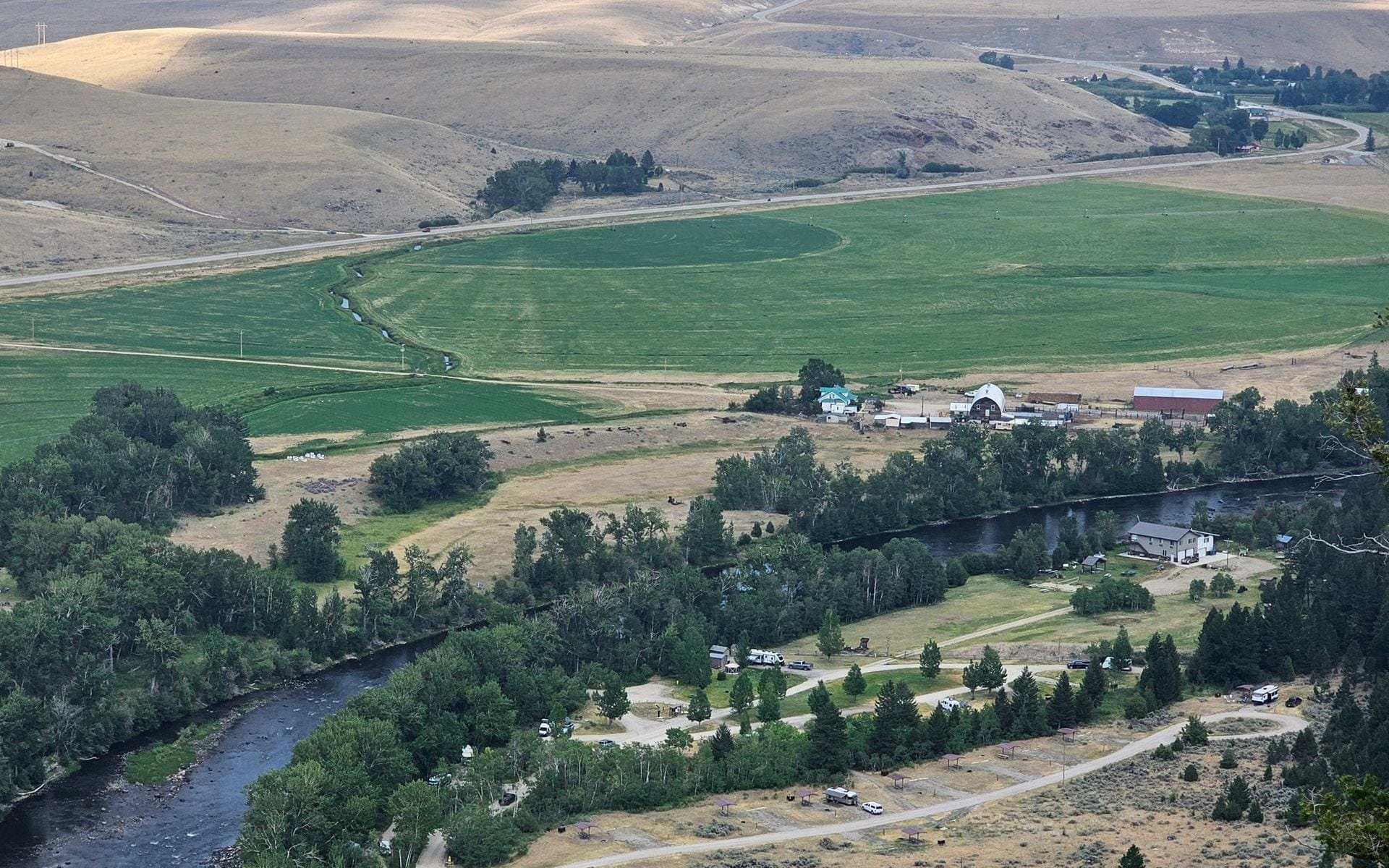
Away from the rivers, the landscape opens into the Big Hole Valley, a broad mountain basin above 6,200 feet where ranchers still put up hay using traditional beaverslide stackers, a wooden stacking method developed here in the early 1900s and used almost nowhere else. In summer you drive through an operating cattle country that looks largely unchanged from a century ago. That combination of deep history, technical fishing, and genuine working-ranch scenery is what sets this corner of the Montana Travel Guide apart from the park-focused regions to the north.
Top Places to Visit
Helena is the most practical base for exploring the upper half of southwest Montana. The city has a good downtown. Windbag Saloon & Grill sits right on Last Chance Gulch and serves pub food with local character; Shellie's Country Cafe on Cedar Street runs 24 hours and is a reliable breakfast stop before an early drive. Lodging ranges from budget motels to independent boutique properties. Plan at least a half day for the Cathedral of St. Helena (completed in 1924 and modeled on the Votive Church of Vienna), Reeder's Alley (a restored stone-and-brick neighborhood dating to the 1860s that functioned as miners' quarters and Chinese laundries), and a walk down Last Chance Gulch, now a pedestrian mall that follows the original placer creek. The Gates of the Mountains boat tour runs on the Missouri River about 20 miles north of Helena, entering a canyon that Lewis and Clark named in their journals. Boat tours run from late May through September; budget roughly $25-35 per adult.
Bannack State Park sits about 25 miles west of Dillon on a gravel county road. It is one of the most complete ghost towns in the West: more than 60 original structures, including the jail, the Masonic lodge, and the Hotel Meade, that you walk through without roped-off zones or required guided interpretation. Day use entry runs approximately $8 per vehicle. Come on the third weekend of July for Bannack Days, when living-history volunteers, blacksmiths, and period craftspeople set up throughout the town. It is one of the few events in Montana where you can watch gold panning demonstrations and territorial-era theater performances inside actual 1860s buildings.
Virginia City and Nevada City, in Madison County about 75 miles north of Dillon via MT-41 and US-287, are better-known ghost towns with a tourism layer on top. Virginia City has an operating narrow-gauge train between the two towns in summer months, and the Virginia City Players run a summer theater series in a historic opera house. A full day here with the train ride and a walking tour of the historic district runs longer than most visitors expect.
Lewis and Clark Caverns State Park, accessible from I-90 between Whitehall and Three Forks, contains one of the largest limestone cavern systems in the Northwest. Guided tours run from late May through early September, covering roughly a mile of passage in about two hours. The cave holds a constant 50 degrees Fahrenheit year-round, so bring a layer regardless of the July heat outside. Adult tour fees run approximately $12-15; book tickets online before arriving in July or August, as tours fill by mid-morning. The tour involves climbing several hundred steps and crawling through low, narrow passages in a couple of spots, so it is not appropriate for visitors who are claustrophobic or have significant mobility limitations.
Top Things to Do
Fly fishing is the primary draw for most out-of-state visitors who make it this far south. The Big Hole River from Divide south through Wise River and toward Wisdom fishes well for brown and rainbow trout in addition to the grayling population. Late June through September is the most consistent window, once spring runoff has settled. The Beaverhead River below Clark Canyon Reservoir near Dillon runs cold and clear most of the season and produces consistently large brown trout. Local outfitters based in Dillon and Twin Bridges run guided float trips; a half-day runs approximately $350-450 per angler, a full-day float $500-650. Summer weekends book out weeks in advance, so plan early. Check our guide to best small towns in Montana for the closest bases to prime fishing water.
The Big Hole National Battlefield, managed by the National Park Service near the town of Wisdom, marks the site of the 1877 attack by U.S. Army forces on a non-treaty Nez Perce camp. The site includes a small visitor center and a walking trail through the actual camp and battlefield, with a tipi village memorial at the river. Entry is free. Budget 1.5 to 2 hours to walk the full trail and go through the exhibits. The battlefield is about 60 miles west of Dillon via MT-43, a two-lane highway through the Big Hole Valley.
For hikers, the Pioneer Mountains south of Wise River and the Beaverhead Mountains along the Idaho border offer trails that see a fraction of the use that Glacier or the Beartooths do. The Pioneer Mountains Scenic Byway, a 45-mile loop connecting Wise River and Polaris on paved and gravel roads, passes through high terrain with access to several trailheads and the Elkhorn Hot Springs resort. Motorcyclists and cyclists also use this route in summer.
Where to Stay
Helena offers the widest range of lodging options in the region. The Best Western Premier Helena Great Northern Hotel sits within walking distance of the downtown pedestrian mall and runs $120-220 per night, and the city has additional smaller properties and bed-and-breakfasts in that same range. Butte has budget-friendly motel-style options at $80-140 per night and works as a central hub if you are splitting time between the mining history sights and the rivers. Dillon is a small ranching town with basic lodging (think clean, no-frills motels at $80-120 per night) but it puts you closest to the Beaverhead River and Bannack State Park. See where to stay by region for a full breakdown of lodging across Montana.
Guest ranches in the Big Hole Valley and the area south of Dillon offer all-inclusive stays that typically run $300-600 per person per night, covering lodging, meals, horseback riding, and guided fishing. These properties book out several months in advance for peak summer weeks in July and August. Ennis, on the Madison River about 75 miles northeast of Dillon, is a solid alternative base for anglers focused on the Madison and has several small motels and vacation rentals in the $100-180 per night range.
Getting There and Around
Helena Regional Airport (HLN) has direct nonstop service from Salt Lake City, Denver, Seattle, and a handful of other western hubs, and is the most convenient airport for travelers focused on Helena, Butte, and the upper Big Hole. Bozeman Yellowstone International (BZN) is the busiest and best-connected airport in Montana and works well if your itinerary includes Three Forks, the Madison River corridor, or Virginia City. The drive from BZN to Helena runs about 90 minutes west on I-90 to Three Forks, then north on I-15. From BZN to Dillon is roughly 2.5 hours south on I-15 through Butte.
A rental car is not optional here. Southwest Montana has no regional transit, no Amtrak service, and rideshare coverage exists only in Helena and Butte. Distances add up fast: Bannack to Lewis and Clark Caverns is about 100 miles, and the Big Hole Valley to Helena is 130 miles on a mix of two-lane highways and I-15. Fill the tank whenever you can in a town of any size; there are stretches in the Big Hole Valley with 40-50 miles between gas stations.
Best Time to Visit
June through September covers most of what draws visitors to southwest Montana. Lewis and Clark Caverns tours run late May through early September. Bannack is technically open year-round, but the staffed season runs May through October and the gravel access road can be impassable in winter and during spring mud season. Fishing on the Big Hole and Beaverhead peaks in late June through September, when runoff has cleared and flows stabilize. July and August are the warmest months: Helena and Butte typically see daytime highs in the low to mid-80s Fahrenheit, while the Big Hole Valley (at 6,200 feet) can drop into the 40s at night even in August.
Fall (late September through mid-October) is a strong second choice for this region. Crowds are thin, cottonwood and aspen turn yellow along the river corridors, and fishing remains good until water temperatures drop. October snowstorms can close mountain passes and make the Bannack road impassable, so carry chains or all-season tires if you travel after early October. Spring (April through May) is mud season: secondary roads can be closed, campgrounds are often not yet open, and rivers run high and cold from snowmelt, making fishing difficult.
Frequently asked questions
Do I need a fishing license to fish the Big Hole or Beaverhead rivers?
Yes. Montana requires a fishing license for anyone 12 and older. Non-resident licenses run approximately $86 for a season license or $15 for a 2-consecutive-day license; check current rates at fwp.mt.gov before your trip since fees are updated annually. Most guided float trips in the Dillon and Twin Bridges area can arrange your license as part of the booking process.
Is Bannack State Park worth visiting if I only have a few hours?
Yes, especially if you arrive before noon and avoid the midday heat. The site is self-guided, and two to three hours is enough to walk through the main structures, including the jail, the Masonic lodge, and the hotel. The third weekend of July is the best time to visit if your schedule allows, when Bannack Days fills the ghost town with living-history demonstrations. Entry runs approximately $8 per vehicle.
Can I do the Lewis and Clark Caverns tour with young children or elderly family members?
Lewis and Clark Caverns tours are not ADA accessible and involve climbing several hundred steps and passing through a few very tight, low passages that require crawling. Children who can handle a moderate physical challenge generally do well. The minimum recommended age is around 6. The cave maintains 50 degrees Fahrenheit year-round, so pack a warm layer for everyone regardless of outside temperatures.
What is the drive time between Helena and Butte?
About 65 miles on I-15, which takes roughly 55-65 minutes in normal driving conditions. The interstate is straightforward and well-maintained. Winter driving between the two cities can be slower due to wind and snow on the Continental Divide near Elk Park; check road conditions at MDT 511 or 511mt.gov before driving in November through March.