Overview
Glacier National Park covers over one million acres with more than 700 miles of maintained trail, and the park's two sides feel like different places. The west side is forested and wetter, with old-growth cedar along the Avalanche Creek drainage and Lake McDonald filling the valley floor. The east side opens into windswept alpine country above St. Mary and the wildlife-rich valley at Many Glacier. Going-to-the-Sun Road connects them, but the drive from West Glacier to St. Mary is 50 miles one way and takes two to three hours when you're stopping, which you will. Respect that distance in your planning. If you want to extend this trip into a broader regional loop, the Glacier Country region guide covers Flathead Lake, Whitefish, and the surrounding northwest Montana landscape. For more on Montana's other major parks, the national parks page covers how Glacier compares to Yellowstone for first-time visitors.
Most visitors fly into FCA (Glacier Park International Airport in Kalispell), about 25 miles from the West Glacier entrance, roughly 30 minutes via US-2. Missoula (MSO) is the next closest at about 2 hours south on US-93. A rental car is required; there is no rideshare coverage on park roads and no public transit between towns. Whitefish, 30 miles west of the entrance on US-2, is the most practical base for the first two nights and has the best concentration of lodging, restaurants, and services near the park.
One logistics issue that trips up first-timers: timed vehicle reservations are required to drive Going-to-the-Sun Road between approximately mid-June and Labor Day weekend, covering the 6am to 3pm entry window. Reservations open in spring on recreation.gov and sell out within hours of release; the park reservations and permits page tracks the current-year system and timing. If you miss them, you can enter the road before 6am or after 3pm without a reservation. Late-afternoon light on the Garden Wall is genuinely good, so the workaround is not a bad one. The park's free shuttle system also runs the full road corridor and is a reliable option if you'd rather not drive the tight sections above the Loop switchback.
Day 1: Arrive via Kalispell and Explore the West Side
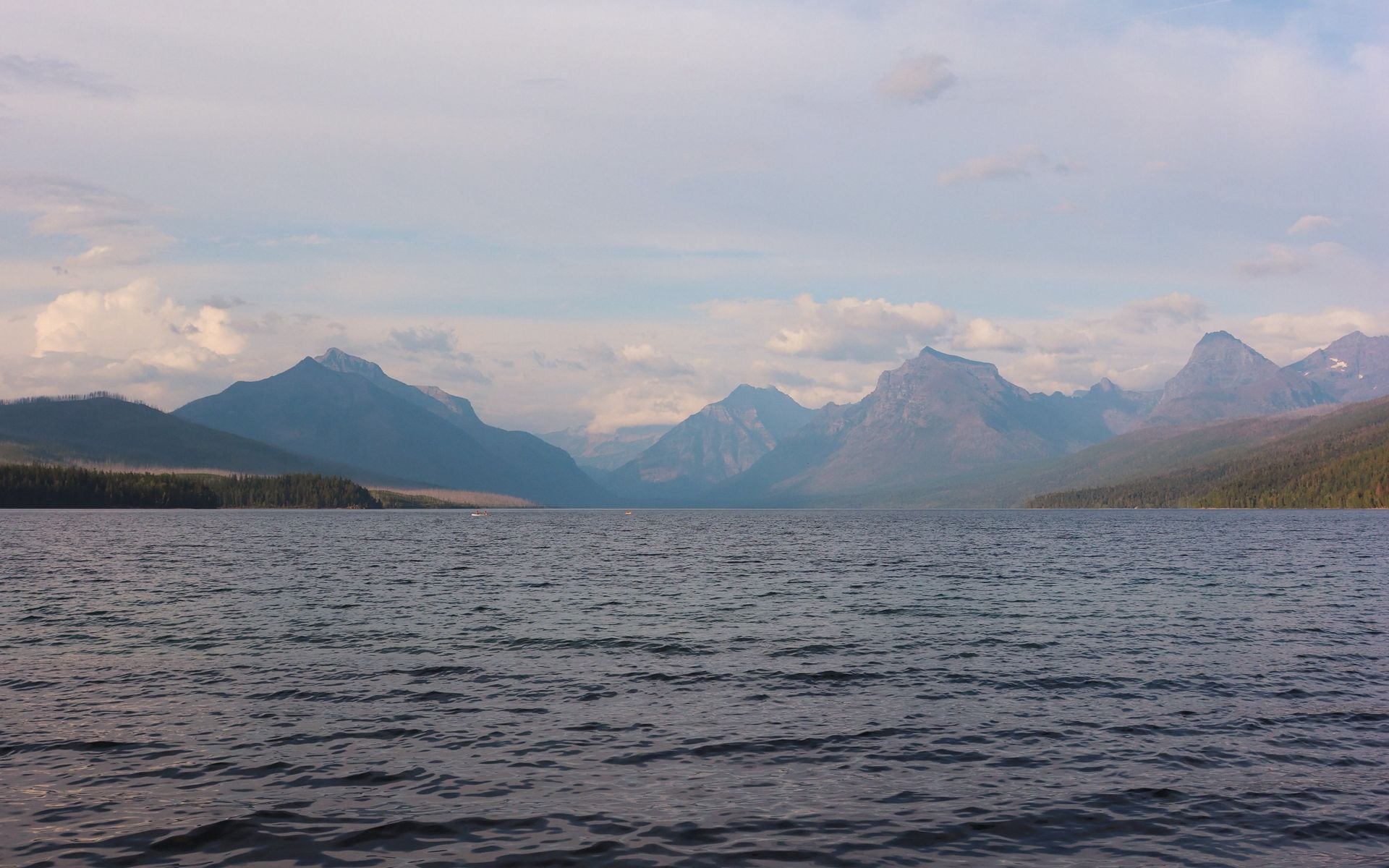
Land at FCA, collect your rental car, and drive roughly 25 miles east on US-2 to the West Glacier entrance, about 30 minutes without traffic. Stop at the Apgar Visitor Center just inside the gate to pick up a trail map and check the shuttle schedule. Then walk to the shore of Lake McDonald, a 10-mile-long lake that stays cold year-round. The colorful red and green pebbles covering the lake bottom are argillite, a Precambrian sedimentary rock roughly a billion years old. It's the same geology that paints the park's cliffs in bands of rust, green, and gray.
From Apgar, drive 5 miles up Going-to-the-Sun Road to the Avalanche Creek trailhead. Start with the Trail of the Cedars, a 0.9-mile boardwalk loop through old-growth western red cedar and a narrow basalt gorge carved by Avalanche Creek. The grove here is unlike anything else in the park; the west side's rainfall and mild winters maintain trees that would not survive the east side's wind and cold. Continue onto the Avalanche Lake trail for a 4.4-mile round trip with about 500 feet of gain, ending at a cirque lake below steep cliffs with waterfalls cutting through snowfields into July. One practical note: the Avalanche Creek parking area fills by 8am on summer mornings. If you're arriving later, take the park shuttle from Apgar rather than looping back for a spot. Drive to Whitefish for dinner, about 30 minutes west on US-2. Whitefish has a full walkable downtown with restaurants and a late-night bar scene that Columbia Falls and Apgar do not.
Day 2: Going-to-the-Sun Road and Logan Pass
Start before 7am. Logan Pass parking at 6,646 feet fills early on summer days, and shuttle lines at Apgar can back up by 8am. If you have a timed vehicle reservation, drive the road yourself; if not, enter before 6am or plan to use the shuttle. The road climbs from Apgar to Logan Pass in about 32 miles, gaining roughly 3,000 feet. Vehicles or vehicle-trailer combinations over 21 feet are not permitted on the road above Avalanche Creek, so any towing arrangements have to stay at West Glacier. The section above the Loop switchback cuts into near-vertical cliff faces along the Garden Wall with unobstructed views down to the valley floor. Stop at the Weeping Wall pullout, where springs seep directly through the cliff and run across the road surface, and at the Bird Woman Falls overlook.
At Logan Pass, two of the park's best hikes leave from the visitor center. The Hidden Lake Overlook is approximately 5.4 miles round trip with about 850 feet of gain. The route crosses a boardwalk through alpine meadows that mountain goats share with hikers through most of the summer, then gains a ridge with a view down onto Hidden Lake and the peaks beyond. Snowfields often cover portions of the trail into early July, so check current conditions at the visitor center; the best time to visit page covers how snowpack shifts the trail-opening season year to year. The Highline Trail runs north along the Garden Wall from the pass with no major elevation changes and near-continuous views; mountain goats and bighorn sheep are reliably present from July through September. The trail extends 7.6 miles to Granite Park Chalet, where the park shuttle can collect you and return you to Logan Pass.
After Logan Pass, continue east on Going-to-the-Sun Road to the St. Mary valley. The descent passes the Wild Goose Island overlook on St. Mary Lake, which is roughly 10 miles long and one of the most photographed views in the park. Stop briefly here before driving north on US-89 toward lodging near Many Glacier. The drive from Logan Pass to the Many Glacier Road junction is about 30 miles and takes 45 minutes.
Day 3: Many Glacier Valley
Many Glacier Road turns west off US-89 about 9 miles north of St. Mary. The road runs 12 miles into the valley and ends at the Swiftcurrent trailhead and the Many Glacier Hotel, built in 1914 by the Great Northern Railway in a Swiss chalet style directly on Swiftcurrent Lake. There is no shuttle connection into Many Glacier from outside the valley, so you need to drive in. Arrive before 8am to get a parking spot at Swiftcurrent; by mid-morning the lot fills and cars line the road a quarter mile back.
On the drive in, pull over at Horseshoe Park, a flat meadow about 2 miles before the hotel. Grizzly bears feed here early in the morning and in the evening, and park rangers frequently set up spotting scopes at the pullout in July and August. This is one of the most reliable grizzly-viewing locations in the lower 48 outside Alaska. From the hotel, the Swiftcurrent Nature Trail loops 2.7 miles around the lake, stays nearly flat, and keeps you in prime habitat for bears, moose, and waterfowl. For a harder day, the Grinnell Glacier Trail runs about 11 miles round trip with 1,600 feet of elevation gain, reaching one of the park's remaining glaciers and the turquoise meltwater pools below it. Start no later than 7am for a reasonable shot at a quieter trail and better odds of clear skies before afternoon thunderstorms build.
A boat service from the Many Glacier Hotel dock crosses Swiftcurrent Lake and Lake Josephine, cutting roughly 2 miles off each direction of the Grinnell hike and letting you save energy for the steep upper section. Book the boat in advance through Glacier National Park Lodges; seats fill on busy summer mornings. The service runs from roughly mid-June through mid-September. For travelers who are adapting this kind of trip for kids, the Montana Family Itinerary shows how to route Glacier alongside other parts of the state with children in mind.
Where to Stay
Inside the park, the main options on the west side are Lake McDonald Lodge, a historic timber-frame lodge on the lake dating to 1913, and the Village Inn at Apgar with smaller motel-style rooms. Both are operated by Xanterra and fill fast for peak summer dates. Many Glacier Hotel on the east side books at the same pace. Expect to pay roughly $160 to $360 per night for park lodging depending on room type and timing (estimated). The adjacent Swiftcurrent Motor Inn is less expensive at roughly $100 to $160 per night (estimated) and puts you at the Many Glacier trailheads without the hotel price.
Whitefish is the strongest option for staying outside the park. It is 30 miles from the West Glacier entrance and has the most lodging variety: downtown hotels, vacation rentals, and several larger properties near the highway. Summer rates run roughly $130 to $320 per night (estimated). Columbia Falls, 8 miles closer to the park, has more mid-range options at roughly $90 to $180 per night (estimated). On the east side, St. Mary and Babb (just north on US-89) have limited but functional lodging, mostly smaller inns and motels.
Camping inside the park costs roughly $25 to $35 per night (estimated). Apgar, Fish Creek, and Many Glacier campgrounds are the largest. Fish Creek is the only campground that accepts RVs over 21 feet. All peak-season campgrounds book through recreation.gov and often sell out within minutes of reservation windows opening. If you missed the initial release, check recreation.gov each morning at 8am Mountain time for same-day cancellations. For a full overview of building a Montana trip around this itinerary, the Montana Travel Guide covers regions, timing, and practical logistics statewide.
Book These Ahead
Going-to-the-Sun Road timed vehicle reservation: required for vehicles under 22 feet entering the road corridor between 6am and 3pm from approximately mid-June through Labor Day weekend. Reservations open on recreation.gov in spring; the exact release date changes year to year, so check the park's website for the current-year schedule. They sell out within hours. The workaround is entering before 6am or after 3pm, both of which require no reservation. Park entrance fee: $35 per vehicle for a 7-day pass as of 2025 (confirm at nps.gov before your trip). If you plan to visit Yellowstone or other federal parks on the same trip, the America the Beautiful annual pass at $80 covers all federal lands for one year and pays for itself after two park visits.
Park lodges through Xanterra and Glacier National Park Lodges typically open reservations in late fall or winter for the following summer, and Many Glacier Hotel books out first. Campground reservations through recreation.gov follow a rolling six-month window per calendar date. The Grinnell Glacier boat service books through Glacier National Park Lodges and is worth securing before you leave home if you want the Grinnell hike. Red bus tours, the park's historic narrated open-top jammer trips along Going-to-the-Sun Road, are another option worth booking ahead, especially if driving the road yourself creates anxiety. Routes run two to four hours at estimated prices of $30 to $65 per person (confirm current pricing on the park website). Anglers who want to add river time before or after Glacier will find outfitter options and river-by-river notes in the Montana Fly Fishing Trip itinerary, covering the Flathead and the blue-ribbon rivers further south.