Overview
Montana is big enough to overwhelm a trip if you try to do too much of it. For a family vacation, the smarter play is to pick one corner and go deep. The northwest, anchored by Glacier Country, gives you Glacier National Park, a massive lake, a real small town, and enough variety to keep kids of different ages engaged for a week. This five-day version uses Whitefish as a home base throughout, so you are not repacking the car every day.
The full Montana Travel Guide covers all six regions of the state. If your family is also open to fly fishing, the Montana Fly Fishing Trip itinerary covers nearby options on the Flathead River and North Fork that pair well with a few extra days here. If you want a broader overview of how to compress Montana into a tighter window, see the 5 Days in Montana itinerary, which covers more ground at a faster pace.
Day 1: Arrive in Whitefish
Glacier Park International (FCA) in Kalispell is your arrival airport. Alaska, Delta, and United fly direct from Seattle, Salt Lake City, Minneapolis, and Denver. The airport sits about 15 miles south of Whitefish on US-2, roughly a 20-minute drive. Grab groceries in Kalispell or Whitefish before checking in, because Glacier-area grocery options thin out fast once you leave town.
Keep Day 1 light. Whitefish is a walkable small town with a main street, restaurants, and an ice cream shop. Whitefish Lake is five minutes from downtown by car. Whitefish Lake State Park has a free public beach with calm water and a small grassy area, which is exactly the right amount of activity after a travel day. The lake warms enough for swimming by late June and stays comfortable through August.
Day 2: Glacier National Park, West Side
The West Glacier entrance is 25 miles southeast of Whitefish on US-2, about a 35-minute drive. Stop first at Apgar Village at the south end of Lake McDonald. There are restrooms, a small visitor center, a boat dock, and a rocky beach where kids can wade. Lake McDonald is the largest lake in the park: 10 miles long and nearly 500 feet deep. The water stays around 50 to 55 degrees Fahrenheit even in late July, so serious swimming is limited, but the shoreline is good for an hour.
From Apgar, take Going-to-the-Sun Road east toward Logan Pass at 6,646 feet. The full road runs 50 miles across the park and is one of the genuinely spectacular drives in Montana's national parks. In peak summer, mid-June through mid-September, the busiest corridor requires a timed vehicle reservation. These go on sale in the spring, often in April or May, and they sell out within hours. Do not wait until you book flights. Get the reservation first. Once you have it, the drive up earns every bit of the reputation: waterfall pull-offs, exposed ridgeline above the tree line, and mountain goats that occasionally walk through the Logan Pass parking lot as if the cars are furniture.
Walk the Hidden Lake Overlook boardwalk from Logan Pass. It is flat, well-maintained, and about a mile each way to the overlook with a view down to Hidden Lake and the peaks behind it. Round-trip takes 45 to 60 minutes at a family pace. This is the most accessible high-alpine walk in the park.
Day 3: Trail of the Cedars and Lake McDonald by Boat
The Trail of the Cedars is the best trail in Glacier for families with younger kids. It is a 0.9-mile paved loop through old-growth western red cedar and hemlock, with a wooden boardwalk over Avalanche Creek. The loop is fully accessible by stroller, which is rare in Glacier. The trailhead sits off Going-to-the-Sun Road about 15 miles from Apgar. Get there before 9 a.m. in summer. The parking area fills fast, and by mid-morning your only option is the park shuttle from Apgar or the Avalanche Creek stop, which works fine but adds time.
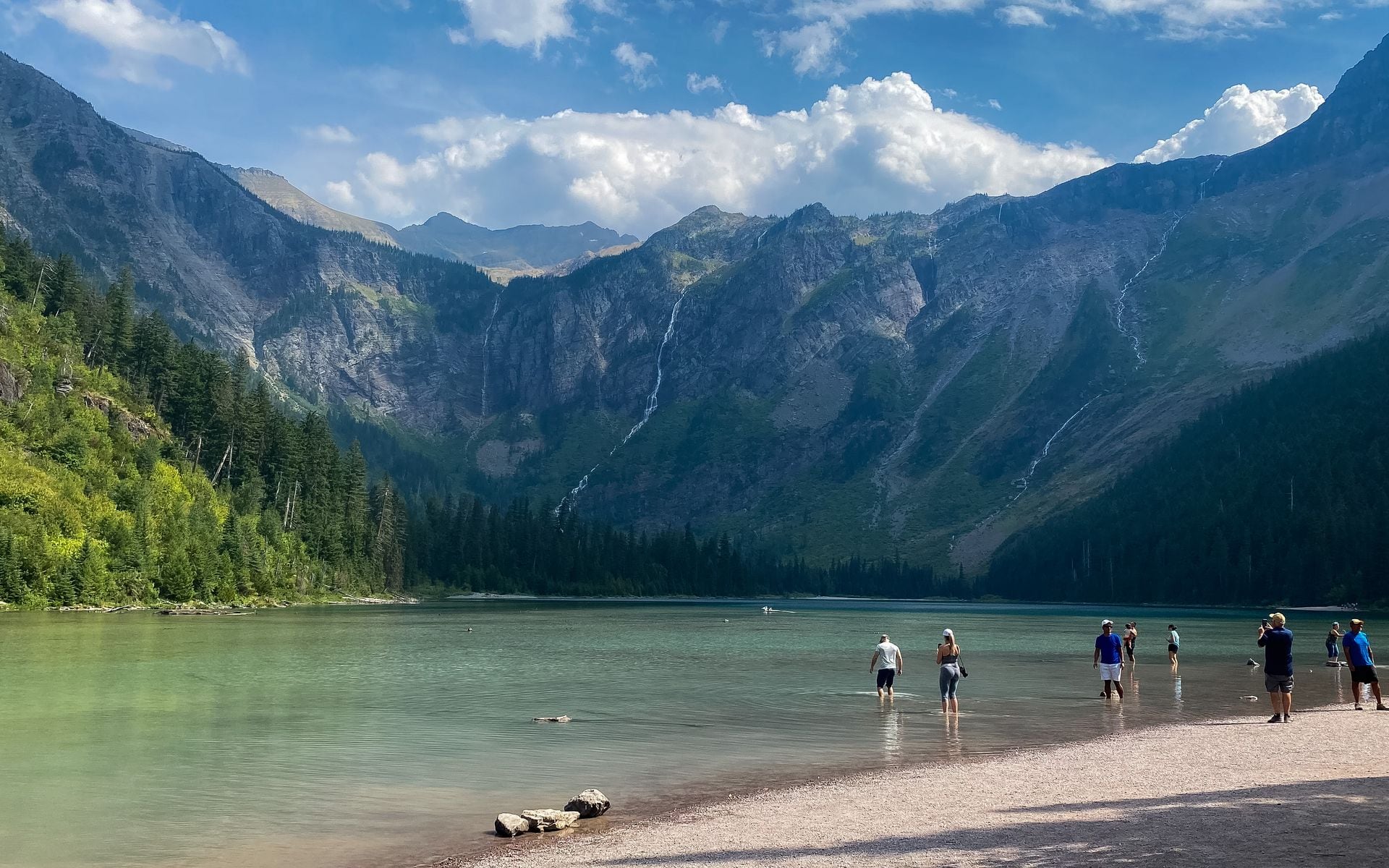
If older kids want more mileage, the Avalanche Lake trail continues beyond the cedar loop, climbing through forest for 4.5 miles round-trip to a glacial lake with waterfalls dropping off three sides of the cirque. The elevation gain is around 500 feet, manageable for kids who can hike a few miles. Plan two to three hours for the full out-and-back.
Spend the afternoon on a Lake McDonald boat tour. Glacier Park Boat Company runs 45-minute narrated tours from the Lake McDonald dock, giving you the park from the water. Prices are roughly $20 to $30 per adult and $12 to $18 per child for a standard tour (these are estimates; check current rates when booking). The boats are covered, the pace is relaxed, and the views of the peaks from the middle of the lake are worth the time.
Day 4: Flathead Lake and Polson
Flathead Lake is about 30 miles south of Whitefish on US-93. The drive to Polson, which sits at the south end of the lake, is 65 miles and runs about an hour. Flathead is the largest natural freshwater lake west of the Mississippi, 28 miles long and 15 miles wide. The scale of it surprises most visitors who assume it is something smaller.
Sacajawea Park in Polson has a free public beach on the lake with a boat ramp, playground, and easy parking. It is a good low-key stop for swimming and lunch before the main afternoon activity. If you are driving up the west side of the lake in mid-to-late July, pull over for roadside cherry stands along US-93. Flathead cherries have about a two-week season and the fruit sold from roadside stands is the real version, not the grocery-store substitute.
Book a boat tour to Wild Horse Island if you can. Wild Horse Island is a 2,163-acre state park in the middle of Flathead Lake, reachable only by water. Several outfitters in Polson and Dayton run half-day tours, and the island has actual wild horses, bighorn sheep, bald eagles, and mule deer. Tours run roughly $40 to $70 per adult and $25 to $40 per child depending on length (estimates; verify with operators). This is the kind of afternoon that sticks with kids.
Day 5: Whitefish and Departure
Save Day 5 for a slow morning in Whitefish. Breakfast downtown, a walk along Central Avenue, and a last swim at Whitefish Lake State Park if the timing works. The park is five minutes from downtown and has free parking in the morning before the day-use crowds arrive.
FCA is about 35 minutes from Whitefish. For afternoon or evening departures, the drive back is straightforward on US-2. If you have an early flight, pack the car the night before and plan to be on the road by 5:30 a.m. to be safe. Security at FCA moves quickly for a small airport, but early summer mornings can get busy with outbound Glacier visitors.
Where to Stay
Whitefish is the right base for this itinerary. Hotels near downtown run $150 to $280 per night in summer (estimate). Vacation rentals on VRBO or Airbnb often make more sense for families, with two- and three-bedroom homes running $200 to $400 per night depending on size and timing. Book four to six months ahead for July and August.
Lodging inside Glacier at Lake McDonald Lodge or Apgar is popular, but these properties book out a year or more in advance for summer. If you want to try, check the Xanterra Parks and Resorts site and set an alert. For most families, staying in Whitefish and driving in each day is more flexible and usually easier.
Book These Ahead
The Going-to-the-Sun Road timed vehicle reservation is the most time-sensitive booking on this list. Reservations typically open in spring for the upcoming summer. They sell out in a matter of hours, not days. Set a calendar reminder and buy the reservation before you book anything else for this trip.
Also book ahead: the Lake McDonald boat tour with Glacier Park Boat Company (fills quickly in July and August), the Wild Horse Island boat tour if you want a specific date and time, and your Whitefish lodging for peak summer dates. The Glacier park entrance pass is $35 per vehicle and valid for seven days. You can buy it at the entrance station or online in advance.
Frequently asked questions
What age is this itinerary suited for?
The core activities here work well for kids roughly 4 and up. The Trail of the Cedars is paved and stroller-friendly, the Lake McDonald boat tour is low-key, and Wild Horse Island is a hit across ages. The Going-to-the-Sun Road drive and Logan Pass boardwalk are fine for kids of any age who tolerate being in a car on switchbacks. Toddlers do this trip fine; the main challenge is managing nap schedules around driving windows.
Do I need a reservation to drive Going-to-the-Sun Road?
Yes, during peak season. From mid-June through mid-September, the busiest corridor of Going-to-the-Sun Road requires a timed vehicle reservation. The reservation covers a specific entry window and is separate from the park entrance pass. Reservations open in spring and sell out fast, sometimes within hours of going live. Check the Glacier National Park website for the current year's system and dates before you plan around this drive.
When is the best time to bring a family to Glacier?
Late June through early August is the sweet spot. Going-to-the-Sun Road typically opens fully in late June or early July (snow determines the exact date each year), temperatures in the valley run 65 to 80 degrees Fahrenheit during the day, and daylight runs until 9 p.m. or later. July is peak season and the most crowded; late June and early August are slightly less packed while still offering the same access. Avoid August if wildfire smoke is a concern for young kids, as some summers bring heavy smoke from regional fires.