Montana earns its reputation with families the same way it earns it with everyone else: the scale is real, the wildlife is real, and the moments kids come away with are the kind they bring up years later.
Why Montana Works for Families
Few places in the lower 48 hand kids a genuine wildlife sighting the same afternoon they hike to an alpine lake. Montana does this regularly. Glacier and Yellowstone together give you two of the most wildlife-dense parks in North America, and the drive between them passes through valleys where elk, deer, and pronghorn are roadside regulars. The Montana travel guide covers the full scope of the state, but for a family trip the parks are where you want to spend most of your time.
The Museum of the Rockies in Bozeman is one of the strongest natural history museums in the country for kids who are into dinosaurs. It holds one of the largest T. rex skull collections anywhere and covers Montana’s Hell Creek Formation with enough depth to hold the attention of older kids and adults alike. Admission runs approximately $14-$16 per adult and $10-$12 per child (estimate; check current rates). It’s a solid half-day stop and a good option if afternoon weather turns stormy, which it does in Montana from June through August.
Montana is also genuinely big, which is the main thing families need to plan around. Bozeman to Glacier is roughly six to seven hours of driving. Most families either base in one region or fly in and out of different airports to avoid backtracking. Build in more time than you think you need between places, and the distances stop being a problem.
Glacier National Park with Kids
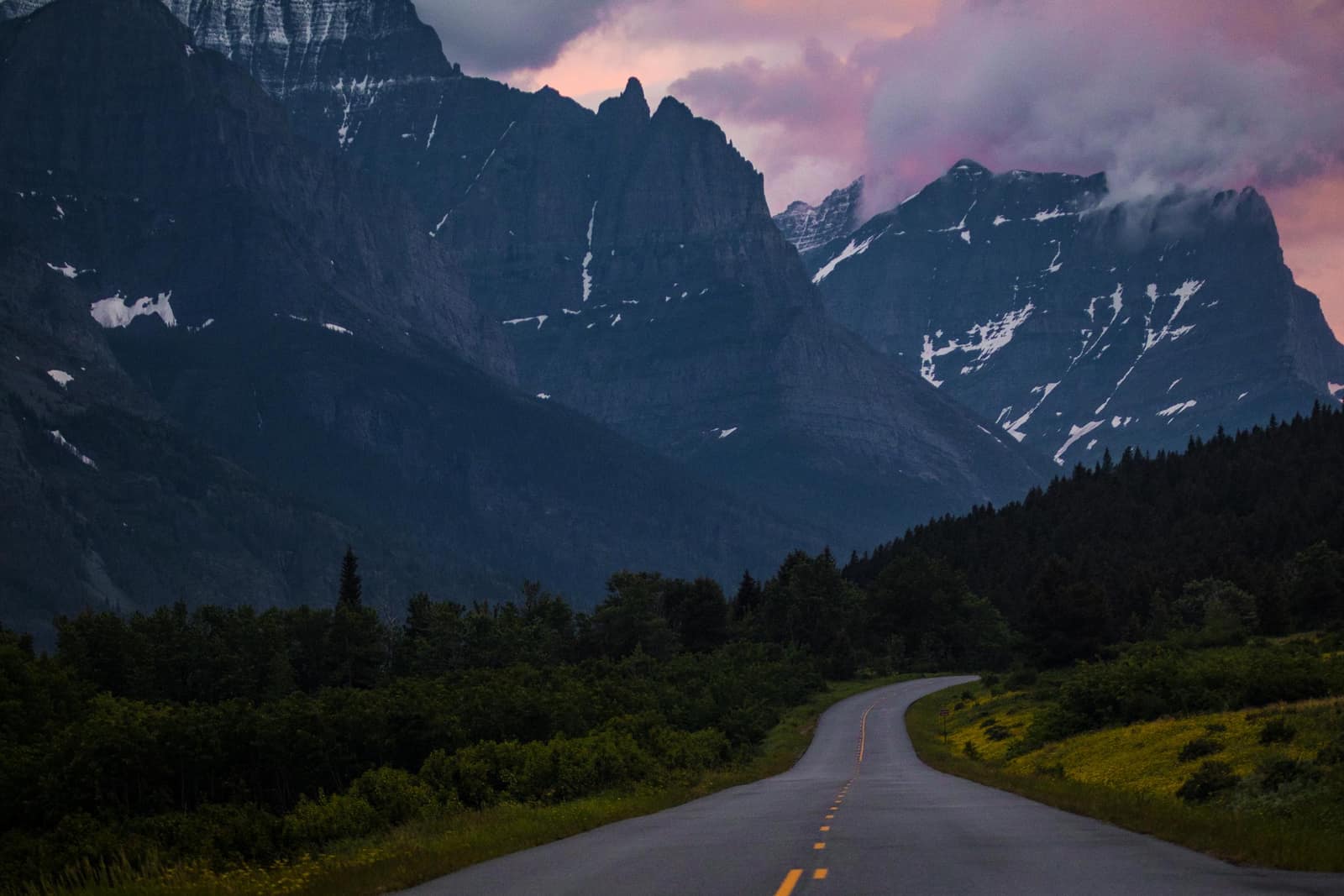
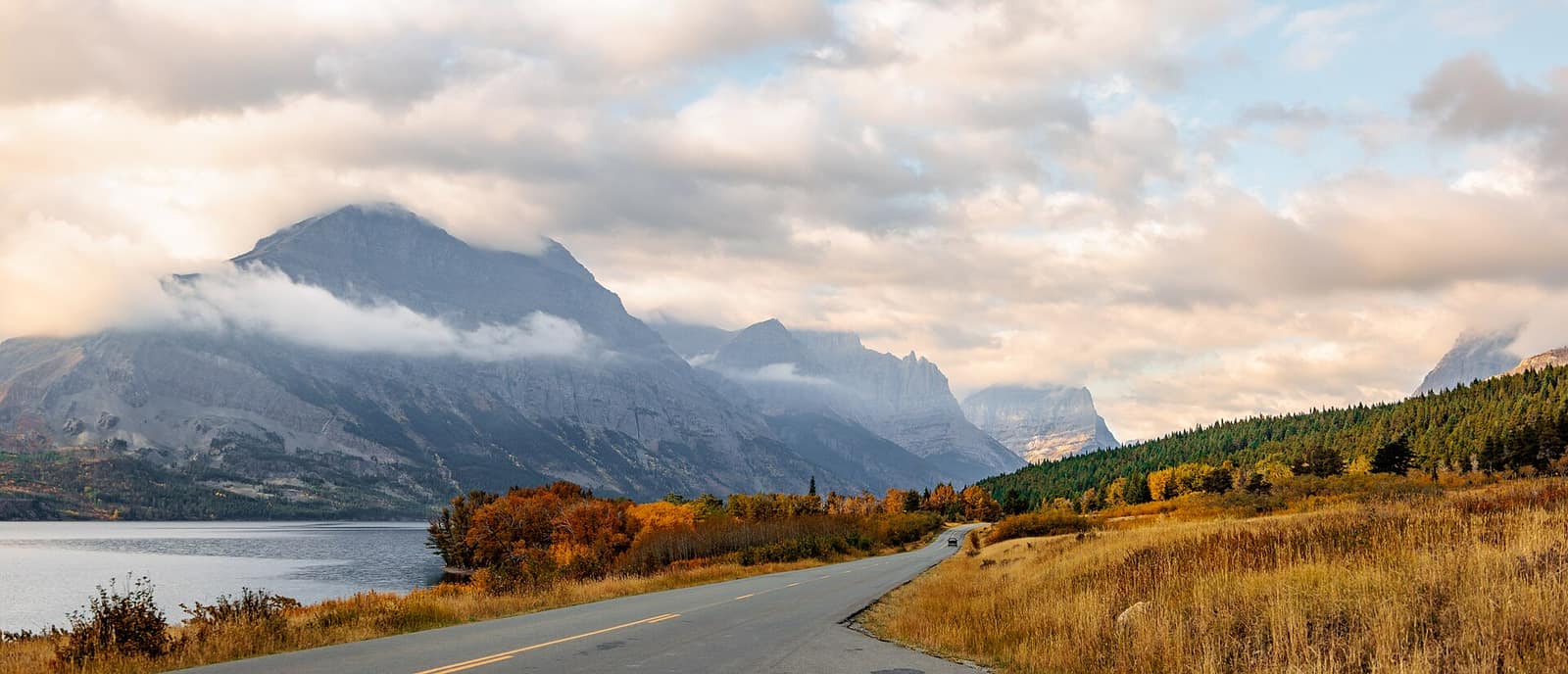
Going-to-the-Sun Road is the main event at Glacier, and it’s doable with kids of any age as long as you’re in a standard vehicle or smaller. The road has a 21-foot limit on vehicle length including any tow, so rental cars and standard SUVs are fine. The full route runs 50 miles from the Apgar Visitor Center on the west side to the St. Mary entrance on the east, climbing through alpine terrain to Logan Pass at 6,646 feet. Stop at Logan Pass to scan the rocky slopes above the parking area for bighorn sheep and mountain goats, which are common in July and August. The pass fills to capacity by 8 or 9 a.m. in peak summer; get there before 7 a.m. or plan to arrive after 4 p.m. Our Going-to-the-Sun Road guide covers the timing and logistics in detail.
For younger kids, the Trail of the Cedars near Avalanche Creek is one of the few paved, near-flat trails in the park. It’s a 1-mile loop through old-growth western red cedar and is stroller-accessible in dry conditions. Older kids can continue on the Avalanche Lake Trail, which adds another 2 miles to a glacially carved lake ringed by waterfalls. Both trails start from the same trailhead, roughly 16 miles east of Apgar on Going-to-the-Sun Road.
The Junior Ranger program at Glacier starts at age 6 and gives kids a structured way to engage with the park through ranger-led activities and a booklet they work through at their own pace. Pick up the booklet at any visitor center, including Apgar or Logan Pass. Kids who complete it get a badge at any ranger station.
Lake McDonald, the park’s largest lake and the first major stop from the west entrance, is famous for its smooth, multicolored pebbles on the shoreline. Kids will spend time collecting them. Just a reminder: removing rocks or any natural materials is prohibited in the national park. Look, photograph, and leave them.
Yellowstone with Kids
Montana holds three of Yellowstone’s five park entrances: the North Entrance at Gardiner, the Northeast Entrance near Cooke City (seasonal), and the West Entrance at West Yellowstone. For families flying into Bozeman (BZN), West Yellowstone is the most practical starting point, about 90 miles south of Bozeman on US-191. From the West Entrance, it’s roughly 30 miles to Old Faithful. The geyser erupts on an average interval of 90 minutes and is a near-guaranteed crowd-pleaser at any age. The visitor center nearby has a predicted eruption board so you can time your arrival.
Bison jams are real and unavoidable in summer. A herd walking through the road near Mammoth Hot Springs or in the Lamar Valley will stop traffic for 20 to 30 minutes, and most kids find it genuinely interesting rather than frustrating. Keep the 25-yard distance rule in mind: bison look slow but move fast. The Midway Geyser Basin, which includes the Grand Prismatic Spring, is an easy 1.5-mile boardwalk loop and delivers the most vivid thermal color in the park. The steam and the scale of the hot spring pool register with kids immediately.
Book Yellowstone lodging through the park’s official concessionaire as far in advance as possible, ideally six months out for July. Canyon Lodge and Old Faithful Inn both take reservations and are popular family choices. If you’re staying outside the park, West Yellowstone has a range of hotels and motels; summer nightly rates typically run $180-$280 (estimate). Campgrounds inside the park fill by mid-morning in summer and are best reserved well ahead through Recreation.gov.
Other Stops Worth the Drive
Big Sky Resort, about an hour south of Bozeman on US-191, operates gondola rides to the Lone Peak summit area in summer. The ride itself is the draw for kids, with wide views above treeline at roughly 11,000 feet elevation. Big Sky in summer is also a hub for family rafting on the Gallatin River. Several outfitters in the area run trips on the calmer class II-III stretches of the river, which are suitable for kids age 7 and up. A half-day raft trip typically runs $65-$90 per person (estimate). The Montana family itinerary shows how to fit Big Sky into a longer trip routing.
Lewis and Clark Caverns State Park, located between Three Forks and Whitehall in southwest Montana, runs guided cave tours through one of the largest limestone cave systems in the Northwest. Tours last about two hours and involve some crouching and tight passages that make it more adventure than lecture for kids. The park operates May through September; admission runs roughly $10-$15 per adult and $5-$8 per child (estimate). It’s about 50 miles west of Bozeman on I-90 and worth the stop if you’re traveling through that corridor.
Flathead Lake in northwest Montana offers a different pace. The lake is large enough that the far shore disappears into haze on clear days, and the swimming at several public beach areas is genuinely good in July and August when the water warms. Wild Horse Island, accessible by boat from the east shore, is home to a small herd of wild horses and bighorn sheep. Charter boat tours from the lake’s east shore towns make the island trip practical without your own watercraft.
Best Time to Go with Kids
Late June through mid-August is the window when everything lines up for a family trip. Going-to-the-Sun Road is fully open (it usually reaches Logan Pass in late June or early July, though the exact date varies by snowpack), all Yellowstone roads are accessible by car, and both parks have full visitor services and ranger programs running. July is peak season, which means higher prices and full campgrounds, but it also means the best weather and the longest days. Valley temperatures in July run 70-85°F during the day and drop to 45-55°F at night, so layers are useful regardless of the month.
August is slightly less crowded than the first three weeks of July. September brings fewer visitors, cooler temperatures, and the beginning of the elk rut in Yellowstone and the surrounding foothills, which is dramatic to watch. Some park lodges and concession services start closing after Labor Day, and nighttime temperatures drop sharply at elevation. Check what’s still operating before planning a September trip. For the full breakdown of when to come, the best time to visit Montana page covers each month in detail.
Spring, meaning April and May, is not ideal for a family trip to either park. Going-to-the-Sun Road is still snow-covered well into May, Yellowstone’s lower loop can be muddy, and campgrounds are closed or limited. The exception is wildlife watching: early May in Yellowstone’s Lamar Valley brings newborn bison and elk calves and some of the year’s best predator activity.
Logistics and Practical Tips
Renting a car is not optional in Montana. There is no meaningful public transit between parks or regions, and the distances are long. BZN (Bozeman Yellowstone International) is the busiest and best-connected airport in the state and the practical arrival point for a trip focused on Yellowstone and Big Sky. If you’re adding Glacier, flying into FCA (Glacier Park International in Kalispell) for one leg eliminates the six-to-seven-hour drive from Bozeman to Glacier. Rental cars at Montana airports in July average $80-$140 per day (estimate); book as early as possible since summer inventory sells out.
The America the Beautiful National Parks Pass costs $80 and covers entry to all federal lands, including both Glacier and Yellowstone, for everyone in the vehicle for 12 months. Without a pass, each park charges $35 per vehicle, so the pass pays for itself on a single trip that includes both. You can buy it at any park entrance or in advance online. It’s worth having before you arrive.
Bear spray is not optional in Montana backcountry, even on short day hikes in Glacier. Teach kids the basics before the trip: stay together on trail, make noise around blind corners, and never run from a bear. Read the full breakdown in the bear spray in Montana guide before you head out. Canisters can be rented from outfitters near park entrances in Whitefish, Gardiner, and West Yellowstone if you don’t want to fly with one.
Frequently asked questions
What ages is Montana best suited for with kids?
Montana works for kids as young as 4 or 5 if the trip centers on short walks, wildlife drives, and visitor centers rather than long hiking days. The Junior Ranger programs at Glacier and Yellowstone are geared for ages 6 and up and give younger kids a reason to stay engaged. Teenagers who are into outdoor adventure, wildlife, or geology tend to get the most out of both parks. The Museum of the Rockies in Bozeman is a strong stop for dinosaur-obsessed kids of any age.
How far in advance should we book lodging for a summer family trip?
For July in Glacier or Yellowstone, book six months ahead or more. Lodging inside both parks fills that early for peak summer dates. If park lodges are already booked, look at gateway towns: West Yellowstone and Gardiner for Yellowstone, Whitefish and Kalispell for Glacier. These have more inventory and often lower rates than inside the parks, and the drives are short enough that you can enter the parks each morning without losing significant time.
How do timed vehicle reservations work for Going-to-the-Sun Road?
Glacier National Park uses a timed vehicle reservation system for the Going-to-the-Sun Road corridor during peak season, typically late May through mid-September. Reservations open on a rolling 60-day window through Recreation.gov and sell out quickly for July and August dates. Open the booking window on the morning your date becomes available. If you miss a reservation, early-morning entry (before 6 a.m.) and late-afternoon entry (after 4 p.m.) often don’t require a reservation depending on the current-year rules, so check the park’s official site for the latest.
Can we visit both Glacier and Yellowstone in one family trip?
Yes, but plan at least 10 to 14 days. The drive from Glacier to Yellowstone is six to seven hours, and both parks deserve at least two to three nights each to feel like more than a windshield tour. The most efficient routing for most families is to fly into Bozeman (BZN), spend three to four days in Yellowstone Country, then drive north to Glacier for three to four days, and fly home from Kalispell (FCA). The Montana family itinerary maps this out with specific day-by-day routing and drive times.