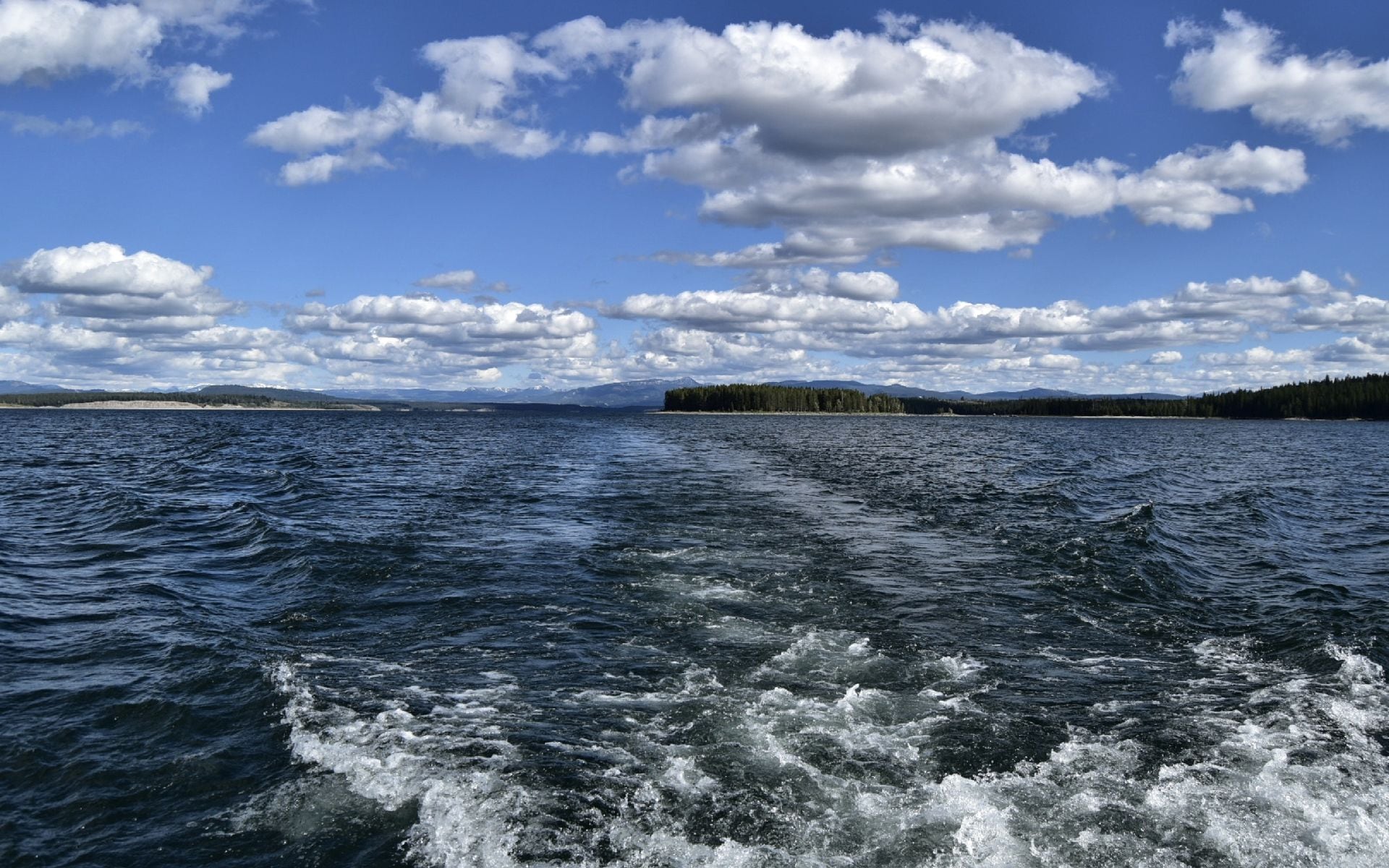
Flathead Lake is the largest natural freshwater lake west of the Mississippi, covering 191 square miles in northwest Montana. From late June through August, it earns its own trip: swimming off state park beaches, sailing open water, picking cherries from east-shore orchards, and fishing for lake trout with the Mission Mountains at your back.
The Lake at a Glance
Flathead Lake stretches 28 miles long and up to 15 miles wide, sitting at roughly 2,900 feet elevation between Kalispell to the north and Polson to the south. US-93 runs the west shore through Lakeside and Big Arm; Highway 35 traces the east shore past cherry orchards and small lake communities before reaching Bigfork at the northeast corner. The lake is deep enough (over 370 feet at the deepest point) and wide enough that afternoon winds build whitecaps regularly by early afternoon on summer days. If you are renting a kayak or paddleboard, plan to be on the water by 9 a.m. and off by noon. For a full overview of the lake itself, see the Flathead Lake guide.
Summer is the clear window: the shoulder months of May and early June are cool and uncrowded, but the cherry stands are not open, the water is still cold from snowmelt, and some of the state park campgrounds have not yet opened for the season. September cools off fast. If you are still deciding when to visit Montana and Flathead Lake is part of your plan, mid-July through early August hits all the marks: swimmable surface temps, cherries in season, and the lake’s charter boats running daily fishing trips.
Swimming and Beaches
The lake surface warms to the low 60s°F by August. That is cold by most standards, but workable on a hot day, and Montana gets hot days in July and August, sometimes pushing into the high 90s°F in the valley. The best public swimming spots are at the Flathead Lake State Park units scattered around the shoreline. Wayfarers State Park, just south of Bigfork on the northeast shore, has a beach with day-use facilities and a boat launch; day use runs around $8 per vehicle. Yellow Bay State Park, a few miles south on Highway 35, is quieter, with a small campground and a grassy day-use area above the water. Big Arm State Park on the west shore has a larger beach and is the main launch point for kayaking to Wild Horse Island.
Polson, at the south end of the lake, has a public waterfront beach in town that fills up on hot July and August weekends. The Polson marina sits right there, so you can transition from swimming to renting a boat without much planning. The water is warmer at the south end of the lake by late July than it is at the deeper north end.
Wild Horse Island
Wild Horse Island is a 2,163-acre state park sitting in the western part of the lake, reachable only by water. There is no dock; you beach a kayak or canoe on the rocky shore. The island holds a small herd of wild horses (usually 5 to 10 animals), bighorn sheep, mule deer, and bald eagles. The bighorn sheep are reliably visible on the south-facing slopes in the morning, often close enough to photograph without a telephoto lens. Budget a half-day for the visit: the open-water crossing from the Big Arm unit is about one mile each way, and the island has several miles of trails worth walking.
No overnight camping is allowed on the island itself. If you would rather not paddle the open-water crossing on your own, water taxis run from Dayton and Big Arm through the summer months. Rates vary by operator but typically run $20 to $40 per person round trip. Reserve a spot a few days in advance on summer weekends; they sell out.
The Flathead Cherry Season
The east shore of Flathead Lake is one of the only places in Montana with a microclimate warm enough to grow sweet cherries at scale, and the annual harvest is a genuine local event. The orchards along Highway 35 between Bigfork and Polson begin opening their roadside stands roughly the second week of July, with peak season running through early August most years. Flathead cherries are a thick-skinned, sweet variety developed for the short Montana growing season. They are not the same as what you find at a grocery chain, and people drive from Missoula, Spokane, and Calgary specifically to buy them.
A few things worth knowing before you make cherries a centerpiece of your trip: the season is short and weather-dependent. A late spring frost or a wet, cool June can cut the harvest significantly or delay it by a week or more. Call ahead to check conditions rather than assuming. Many stands are cash only and close when they sell out for the day, so go in the morning. The stretch of Highway 35 between Yellow Bay State Park and Bigfork has the heaviest concentration of orchards.
Boating, Paddling, and Fishing
The marinas in Polson and Bigfork rent pontoon boats, fishing boats, and kayaks from roughly late May through September. Expect to pay an estimated $100 to $250 per day for a pontoon depending on size, $30 to $60 per day for a kayak or paddleboard. Sailing is well suited to the lake; the afternoon southerly winds pick up predictably by early afternoon most summer days, making the open water good for sail and rough for paddlers who stayed out too long. Jet ski and powerboat rentals are available in Polson.
Flathead Lake holds lake trout (mackinaw), yellow perch, lake whitefish, and smallmouth bass. A Montana nonresident fishing license costs roughly $15 per day or around $50 for two weeks; verify current rates with Montana Fish, Wildlife and Parks before your trip. The deep water near the lake’s north end is where the big mackinaw hold, and charter boats out of Polson and Bigfork typically run half-day trips in the range of $150 to $250 per person. If river fly fishing is more your speed, the Flathead River system near the lake has good options; a full breakdown is in the guide to where to fly fish in Montana.
Where to Base Yourself
Bigfork, at the northeast corner of the lake, is the strongest base for most visitors. It has a walkable main street with galleries, good restaurants, and the Bigfork Summer Playhouse, a professional repertory theater that has been operating since 1960 and performs nightly through July and August. Bigfork sits about 15 miles southeast of Kalispell and 30 to 35 miles from the west entrance to Glacier National Park, making it a reasonable base for combining both the lake and the park in one trip.
Polson, at the south end of the lake, is the commercial hub: more hotels, a casino, grocery stores, and the Polson-Flathead Historical Museum on the Flathead Indian Reservation boundary. Lakeside, on the west shore about 25 miles south of Kalispell, is quieter and more residential, better suited to a vacation rental cabin if you want space and privacy. Nightly rates for vacation rentals around the lake run roughly $175 to $450 in July and August depending on size and lake proximity; hotels in Bigfork and Polson typically range from $120 to $200 per night in peak summer. The lake is a summer-first destination, but if you are curious about what northwest Montana looks like in the cold months, the page on Montana in winter covers the ski towns, snowpack, and what stays open.
Getting to Flathead Lake
The closest airport is Glacier Park International (FCA) in Kalispell, about 15 miles north of Bigfork and 55 miles north of Polson. Summer nonstop service into FCA includes Seattle, Salt Lake City, Denver, Minneapolis, Phoenix, and a handful of other hubs; check current schedules before booking since routes change seasonally. From Missoula (MSO), it is about 65 miles north on US-93 to Polson, roughly an hour of driving. From the west side of Glacier National Park, Bigfork is about 30 to 35 miles south via US-2 and Highway 35.
You need a rental car. There is no public transit between lake towns, no shuttle between Polson and Bigfork, and the state park units are spread far enough apart that a car is necessary for getting around. Book a rental early if you are flying into FCA in July or August; the smaller airport has limited fleet and cars sell out. The Montana travel guide has a full section on airports, car rentals, and driving distances across the state.
Frequently asked questions
Is Flathead Lake worth adding to a Glacier National Park trip?
Yes, and the logistics work well. Bigfork is about 30 to 35 miles from the west entrance to Glacier, making it a practical overnight base for the park and a destination on its own merits. One or two nights on the lake gives you a very different experience from the park: quieter, warmer, with good food and the cherry orchards if you time it right. The Flathead Lake guide covers the full range of what the area offers.
When do the Flathead cherry stands open?
Typically the second week of July, with peak season running through early August in a normal year. The exact timing shifts based on spring weather. The east shore along Highway 35 between Bigfork and Polson has the most stands. Many are cash only and sell out early in the day, so go in the morning rather than the afternoon.
Can you swim in Flathead Lake in summer?
Yes, though the water is cold through most of June. By August the surface reaches the low 60s°F, which is swimmable on a warm day. The best public beaches are at Wayfarers State Park near Bigfork and Yellow Bay State Park on the east shore. Day use at both is around $8 per vehicle. The south end near Polson warms up slightly faster than the deeper north end.
How do you get to Wild Horse Island?
By boat only. There is no dock on the island; you beach a kayak or canoe on the rocky shoreline. The shortest crossing from shore is about one mile from the Big Arm State Park unit on the west side of the lake. Water taxis also run from Dayton and Big Arm in summer, typically $20 to $40 per person round trip. Reserve ahead on weekends. No overnight camping is allowed on the island.