Winter in Montana runs from December through March, covering ski runs at some of the largest resorts in the country, wolf-watching in Yellowstone’s Lamar Valley, and hot springs that feel exactly right when the temperature drops.
Why Winter in Montana Is Worth Considering
Most people come in July. That is not a knock on summer, but it means winter Montana is a quieter, different version of the state. Ski lifts at Big Sky Resort turn on in late November and run into April in good snow years. Yellowstone’s Lamar Valley produces some of the best wolf and bison viewing on the continent in January and February, when visitor numbers are a fraction of what you see in summer. Prices at many lodges and motels drop 20 to 40 percent outside the Christmas and MLK weekend peaks. If you want to start planning, the Montana Travel Guide covers the state across every season.
The tradeoff is real. Mountain roads demand respect, some park roads close entirely, and temperatures in Bozeman and Missoula regularly drop into the single digits in January. Coming in winter without a specific plan is not the same as summer, when any paved road leads somewhere worth stopping. Know what you are after before you book flights.
Skiing and Snowboarding
Montana’s ski season runs roughly from late November through March, with April still viable at higher elevations in good snow years. Big Sky Resort, about an hour south of Bozeman on US-191, is the headliner. With 5,850 skiable acres and 4,350 feet of vertical drop from Lone Peak, it is one of the largest ski areas in the country by terrain, and the crowds do not yet match the footprint. You can ski lines in February that at a comparable Colorado resort would have a 45-minute lift line. See the full breakdown on skiing and snowboarding in Montana for a comparison of all the major resorts and what each one does well.
Whitefish Mountain Resort sits above the town of Whitefish in the northwest corner of the state, about 30 minutes from the west entrance to Glacier National Park. The mountain gets heavy Pacific-moisture snowfall and has genuine ski-town culture backed by Whitefish’s walkable downtown with its restaurants and breweries. Bridger Bowl, 16 miles northeast of Bozeman, runs as a nonprofit and keeps lift tickets significantly cheaper than the big resorts. Red Lodge Mountain, near Red Lodge on US-212 southwest of Billings, is the eastern Montana option. It is smaller but solid terrain, and BIL (Billings Logan International) is a reasonable entry point.
Lift tickets at Big Sky run approximately $130 to $200 per day (estimate) depending on how far ahead you buy. Bridger Bowl typically runs $60 to $95 per day (estimate), which is genuinely unusual for a mountain with that kind of terrain. Book lodging at Big Sky three to four months ahead for the Christmas-to-New-Year week and the MLK weekend. Those two windows fill completely and prices spike.
Wildlife Watching in Yellowstone in Winter
The North Entrance to Yellowstone through Gardiner, Montana stays open to cars year-round. The Northeast Entrance via Cooke City is also accessible in winter, though the road between Cooke City and the Beartooth Pass is closed, making it a dead-end route from the northeast rather than a loop. The rest of the park road system is groomed for snowmobiles and snowcoaches from mid-December through mid-March, so getting into the park interior requires booking a guided snowcoach trip or renting a snowmobile through a concessioner in West Yellowstone.
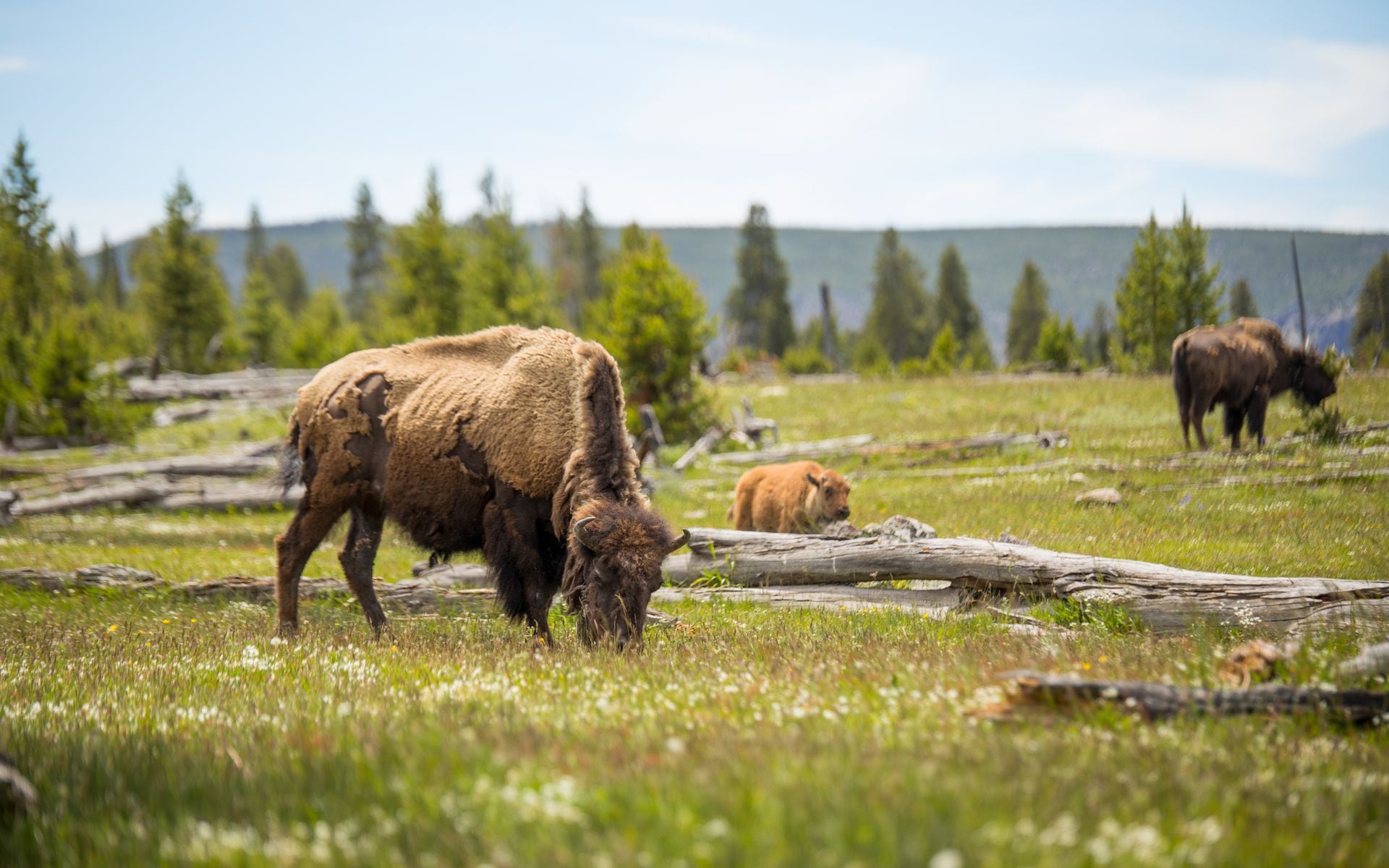
Lamar Valley in January and February is one of the best places in North America to watch wolves. The valley runs along the Lamar River in Yellowstone’s northeast corner, and wolf packs move across open meadows in the early morning hours. Bison congregate where thermal heat keeps ground clear of snow, and the contrast of dark animals against white flats makes them easy to spot. Bring a spotting scope if you have one. The required distance of 100 yards from wolves still applies, but the winter landscape makes it much easier to observe from the road without crowding the animals.
Hot Springs Worth Soaking In
Chico Hot Springs, in the Paradise Valley south of Livingston on US-89, is the Montana hot springs institution worth planning a night around. The outdoor pool stays open year-round, lodging runs approximately $100 to $250 per night (estimate), and the dining room draws a mix of ranchers and park visitors that feels specific to this corner of Montana. It sits about 30 miles north of Yellowstone’s North Entrance at Gardiner, which makes it a natural stopping point before or after the park.
Other reliable options include Fairmont Hot Springs Resort near Anaconda in southwest Montana, with two large pools, waterslides, and full resort amenities. Lolo Hot Springs sits on US-12 about 35 miles west of Missoula and is easy to pair with a drive through the Bitterroot Valley. Quinn’s Hot Springs on MT-135 near the small town of Paradise is a lower-key property with a committed local following and soaking pools at varying temperatures. All three are open year-round, and soaking in a hot pool while snow falls is a reasonable reason by itself to come to Montana in winter.
Driving in Montana in Winter
A rental car is not optional in Montana at any time of year. In winter, the stakes are higher. US-191 between Bozeman and Big Sky is generally well-maintained but icy mornings are common and black ice on shaded canyon sections can form fast. I-90 across the state is plowed regularly, but mountain passes like Homestake Pass between Butte and Bozeman can close briefly during heavy storms. Check the Montana Department of Transportation road conditions site at 511mt.net before driving any mountain route in winter. Four-wheel drive or all-wheel drive with snow tires is the right call if you can swing it on a rental.
Going-to-the-Sun Road in Glacier closes for the season in October and does not reopen fully until late June or early July. The Apgar Village area and Lake McDonald remain accessible in winter and are worth a stop if you are in the northwest corner of the state: the lake is quiet and the surrounding peaks hold snow well into spring. Beartooth Highway (US-212 between Red Lodge and Cooke City) closes for winter and does not reopen until late May, which means Red Lodge Mountain is accessible but Cooke City and the northeast Yellowstone loop are not. For help matching your goals to the right season, the guide on the best time to visit Montana covers each season in detail.
Where to Base Yourself
Bozeman is the most practical winter base for most itineraries. BZN (Bozeman Yellowstone International Airport) has the most direct flights into the state, with nonstop service from Seattle, Denver, Salt Lake City, Dallas, Chicago, and both New York-area airports. From downtown Bozeman you can reach Big Sky in about an hour, Bridger Bowl in 25 minutes, Yellowstone’s North Entrance in roughly 90 minutes, and Chico Hot Springs in about the same. The town has strong dining, craft breweries, and lodging across price points, from budget motels to downtown boutique hotels running approximately $120 to $300 per night (estimate). If you are still sorting out how long to stay, the guide on how many days you need in Montana breaks it down by season and activity.
Whitefish works if skiing at Whitefish Mountain Resort or spending time in the northwest is the priority. The town is walkable and genuinely active in winter, with good dining and lodging from about $100 to $280 per night (estimate). FCA (Glacier Park International Airport in Kalispell) is 15 miles south of Whitefish and has added direct routes from major hubs over the past few years. Livingston, on I-90 east of Bozeman, is a smaller option with fast access to the Paradise Valley and Yellowstone’s North Entrance. The rivers around Livingston and the Paradise Valley hold trout year-round in certain sections, and if fly fishing in winter sounds interesting, the where to fly fish in Montana guide covers the winter options on the Yellowstone and other tailwaters in detail.
Frequently asked questions
Is Montana worth visiting in winter?
Yes, if you have a specific activity driving the trip. Skiing at Big Sky or Whitefish Mountain Resort, wolf-watching in Yellowstone’s Lamar Valley, or a night at Chico Hot Springs in the Paradise Valley are all good reasons to come in winter. Crowds are lighter, prices are lower outside holiday peaks, and some experiences like Lamar Valley wolf sightings and uncrowded ski terrain at Big Sky are better in winter than summer.
What roads are closed in Montana in winter?
Going-to-the-Sun Road in Glacier National Park closes in October and reopens in late June or early July. Beartooth Highway (US-212) closes roughly October through late May. Most of Yellowstone’s loop road closes to cars from November through mid-March and is accessible by snowcoach or snowmobile only. I-90 and US-191 stay open year-round but can have weather-related delays. Check 511mt.net for real-time conditions before driving any mountain route.
When is the best time to ski in Montana?
January through mid-March is peak ski season with the most reliable snow cover statewide. December and April are shoulder months with lighter crowds and sometimes strong conditions. At Big Sky Resort, the Christmas-to-New-Year week and the Martin Luther King weekend are the two most crowded and expensive periods. Book lodging three to four months ahead for those windows. Bridger Bowl near Bozeman is a low-cost alternative that runs as a nonprofit and often has good snow in the same window.
Can you see wolves in Yellowstone in winter?
Winter is the best season for wolf watching in Yellowstone. Lamar Valley in January and February regularly produces early-morning sightings, and the open snow-covered flats make it easier to spot wolves moving at distance from the road. You can access the valley by car from the North Entrance at Gardiner, Montana year-round. Bring a spotting scope, stay a minimum of 100 yards from any wolves, and plan to be out at first light.