How We Picked These Spots
Every location on this list was chosen for consistent, documented wildlife activity, not one-time sightings. We focused on places where independent travelers without a guide can realistically see multiple species in a single outing, with enough road access or marked trail access to make it practical. We also prioritized geographic spread: Montana's six regions each hold distinct wildlife, and this list covers the northwest, south-central, and northeast corners of the state so you can plan around whichever part you're visiting.
For the full picture on planning your trip, including when to come and how to get around a state this size, start with the Montana Travel Guide. Season and time of day matter more than location: nearly every spot on this list produces the best sightings at dawn and dusk, and most are far more productive in spring (April through June) and fall (September through November) than in the height of summer.
Lamar Valley, Yellowstone National Park
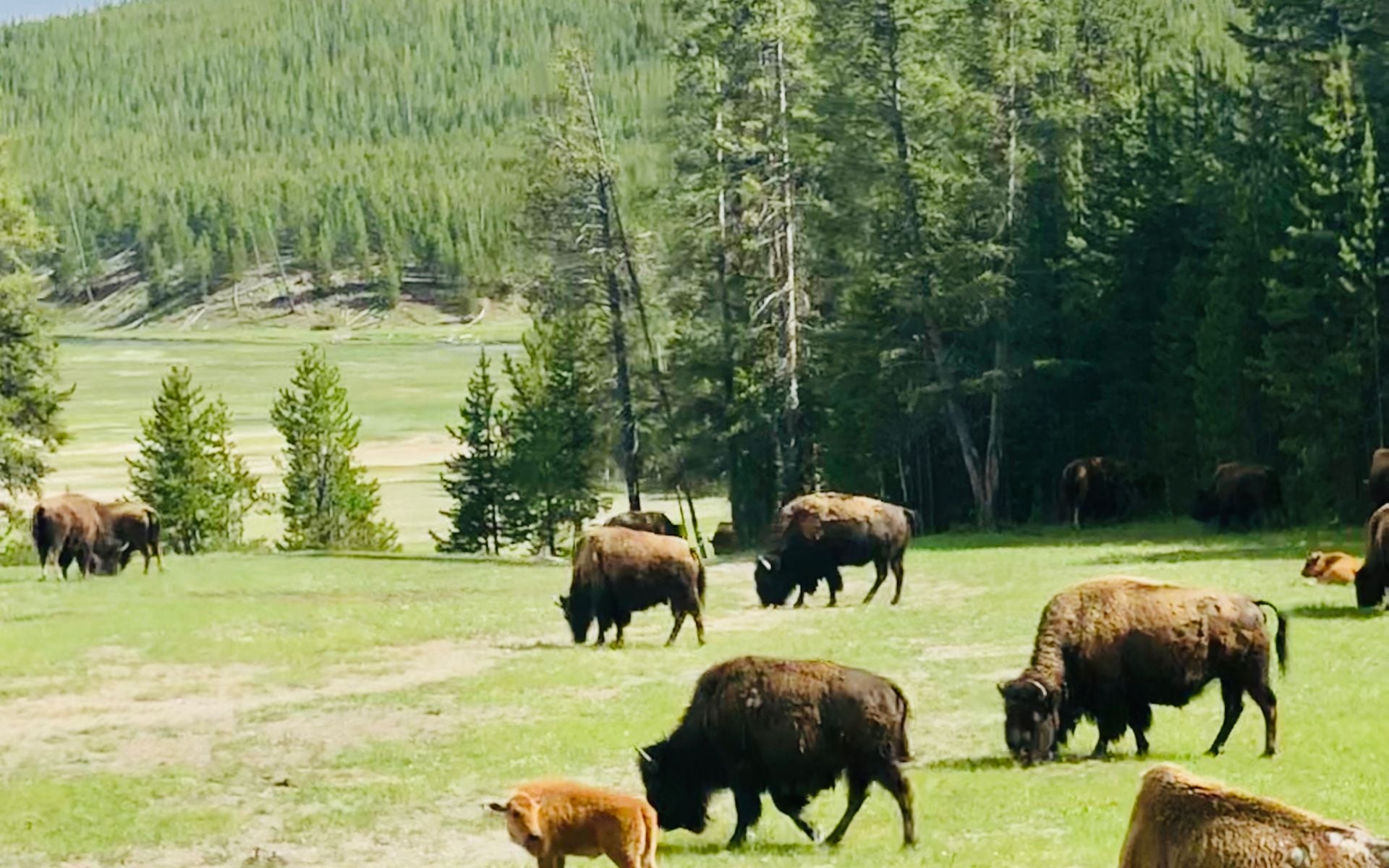
If you see one wildlife location in Montana, make it Lamar Valley. This wide, flat-floored valley in Yellowstone's northeastern corner sits about 50 miles from the North Entrance at Gardiner via US-89 and the park's Northeast Entrance Road. It holds the most reliable large-predator viewing in the continental United States, with multiple wolf packs, a resident grizzly population, black bears, bison herds that regularly number in the hundreds, and pronghorn moving through in spring and fall. The valley's open terrain means you can glass enormous distances from the roadside pullouts between Slough Creek and the Northeast Entrance Station without hiking a single mile.
Arrive before sunrise and scan the hillsides from any of the gravel pullouts along the Northeast Entrance Road. Wolf packs are most active from October through April; April through June overlaps with denning season and pup activity. Grizzlies emerge from dens in late March and feed heavily on winter-killed elk and bison through May. The Northeast Entrance at Cooke City stays open to cars year-round, so this is also the only section of Yellowstone with reliable winter wildlife viewing from a vehicle. Budget a full day here, not a few hours.
Many Glacier and Logan Pass, Glacier National Park
Glacier holds two distinct wildlife zones worth planning around. The Many Glacier valley in the park's northeastern corner, accessed via MT-49 from Browning or US-89 from St. Mary, is the park's most productive area for grizzly bears. Grizzlies feed on glacier lilies and cow parsnip in the sub-alpine meadows from late May through July. Moose show up consistently around Swiftcurrent Lake near the Many Glacier Hotel, and mountain goats and bighorn sheep are visible on the cliffs above the Swiftcurrent trailhead. Black bears appear throughout the valley from berry season onward.
Logan Pass, at 6,646 feet on Going-to-the-Sun Road, is different terrain and different species. Mountain goats and hoary marmots here are fully habituated to human presence; the Hidden Lake Overlook trail (1.5 miles each way from the visitor center) routinely puts hikers within 20 to 30 yards of goats. Grizzlies also cross the pass during huckleberry season in August and September. Note that Going-to-the-Sun Road typically opens fully in late June or early July and closes with snow in October. Everything covered here falls within Glacier Country, and if you're making the drive north, you'll want to plan several days in the region to cover both zones.
National Bison Range, Mission Valley
The National Bison Range near Moiese, about 55 miles south of Flathead Lake in the Mission Valley, was established in 1908 specifically to protect a remnant bison herd. It now maintains 300 to 500 animals on roughly 18,500 acres of shortgrass prairie and riparian habitat along the Flathead River. The 19-mile auto tour route (open May through October, with a per-vehicle entry fee in the range of $10, confirm current fees at the refuge) also passes through habitat that supports bighorn sheep, pronghorn, elk, white-tailed deer, and a variety of raptors including northern harriers and ferruginous hawks.
The terrain shifts from dense cottonwood and willow bottomland to open grassland to steep rocky hillsides on the upper loop, so you're scanning multiple habitat types in a single drive. Come in the morning: animals are in the open before 9 a.m. and again in the last two hours of daylight. Bison rut runs July through September, when bulls are active and the herd is spread across the grassland flats. Fall is the best all-around season here, with elk in the open and bison at full weight before winter. The range is about 25 minutes from Polson and 45 minutes from Missoula.
Rocky Mountain Front
The Rocky Mountain Front between Choteau and Browning is where the Great Plains press directly against the first limestone ridges of the Rockies, and the result is one of the highest grizzly bear densities outside the national parks. The Sun River Game Preserve, which runs along the eastern edge of the Bob Marshall Wilderness Complex, shelters one of Montana's largest elk herds; during the September and October rut, bulls are visible from the roads and two-tracks between Augusta and Choteau. Pronghorn are common along US-89 through this corridor from spring into fall, often visible from the highway at highway speeds.
This is the area to visit if you want legitimate grizzly country without competing with park crowds. Grizzlies are most frequently spotted along Pine Butte Swamp Preserve (managed by The Nature Conservancy near Choteau) and the lower foothills in April and May when they're feeding on winter-killed ungulates. Mule deer, golden eagles, and prairie falcons are year-round. Great Falls, about 45 miles east of Choteau on US-89, is the nearest city with lodging infrastructure. Browse options across the state at Hotels and Lodges, including properties in Great Falls, Choteau, and Augusta that serve this corridor.
Paradise Valley and the Yellowstone River Corridor
The Yellowstone River valley between Livingston and Gardiner, running about 55 miles along US-89, functions as a wildlife corridor for animals that spend summers inside Yellowstone and winters in lower-elevation habitat. Elk herds move through in October and November, often visible from the highway on the benches above the river. Mule deer and white-tailed deer are in the cottonwood bottoms year-round. Bald eagles nest along the river and concentrate in winter when open stretches of water give them reliable fishing; January and February counts sometimes reach 50 or more eagles in a single day on the Yellowstone between Livingston and Gardiner.
Bighorn sheep are a draw year-round on the canyon walls south of Livingston, particularly around the Mill Creek Road area and the canyon stretch between Yankee Jim Canyon and Gardiner. Osprey fish the river from April through September and are visible from most roadside pullouts. This corridor is worth a slow drive in either direction on your way to or from Yellowstone's North Entrance. Livingston and Gardiner are two of Montana's most practical best small towns for basing near this wildlife zone, each with lodging, outfitters, and direct access to the valley.
American Prairie Reserve, Northeast Montana
About 50 miles north of Malta in Phillips County, the American Prairie Reserve is building the largest contiguous wildlife reserve in the continental United States on privately purchased land adjacent to federal grazing allotments. The current property holds free-roaming bison herds, pronghorn, elk, prairie dogs, swift foxes, and rare grassland birds including burrowing owls, ferruginous hawks, mountain plovers, and chestnut-collared longspurs. The reserve is open to the public for wildlife viewing, camping (primitive sites, no fee as of 2025), and hiking, with no admission charge.
This is genuinely remote country. The nearest town with services is Malta (population around 2,000), and cell coverage disappears quickly once you leave US-2. Roads to the reserve involve a mix of paved county roads and gravel two-tracks; a high-clearance vehicle is useful but not always required. If you're willing to drive three hours east of Havre along US-2 and then north, you'll find wide-open prairie wildlife viewing with almost no other people around. Spring (May and June) is the best window for grassland birds and bison calves; fall brings elk and pronghorn movement. A night at a hot springs in the nearby region makes a good addition if you're making this a multi-day loop through northeast Montana.
Charles M. Russell National Wildlife Refuge
The CMR refuge stretches along about 125 miles of Missouri River breaks in north-central Montana, roughly between the towns of Jordan and Fort Peck. Named for Great Falls painter Charles M. Russell, who immortalized this landscape in oil, the refuge is one of the largest in the lower 48 at over one million acres. Elk, mule deer, bighorn sheep, pronghorn, and prairie dogs are the primary species; black bears appear in the breaks; and the Fort Peck reservoir draws thousands of waterfowl during spring and fall migration, including white pelicans that are unmistakable on the water.
Most interior roads are gravel and many require high-clearance vehicles, especially after rain when the gumbo clay becomes impassable. Access points come off US-191 between Malta and Jordan and off MT-200 south of Fort Peck. Wildlife viewing is best from September through November when elk and deer move out of the deep breaks onto open ridges and two-tracks. The small towns along this route, including Malta, Glasgow, and Jordan, are the kind of genuine high-plains communities you won't find near the parks. Jordan, in particular, sits at roughly the geographic center of the state and gives you a feel for just how big Montana is.
Quick Comparison
Choose Lamar Valley if you want the highest odds of seeing wolves and grizzlies together in a single outing. Choose Many Glacier for the best grizzly viewing on foot, and Logan Pass for mountain goats within arm's reach. Choose the National Bison Range for the easiest self-guided drive with guaranteed bison viewing and minimal planning. Choose the Rocky Mountain Front if you want grizzly country without the crowds and don't mind doing some research to find the current access points. Choose Paradise Valley and the Yellowstone River corridor if you're already driving US-89 between Livingston and Gardiner, since the wildlife can be spectacular without adding any miles. Choose the American Prairie Reserve or the CMR refuge if you want northeast prairie wildlife and you're comfortable with remote roads and limited services.
None of these locations requires a guide, but a local outfitter adds real value at Lamar Valley (where knowing which wolf pack is active and where to position changes sightings dramatically) and at the Rocky Mountain Front for the grizzly-specific areas. For the parks, the National Park Service ranger programs at Many Glacier and at Lamar Valley are worth checking: the naturalist-led dawn walks in Many Glacier in June and July are among the best wildlife experiences in Montana for the cost of a park entry fee.
Frequently asked questions
When is the best time to see wildlife in Montana?
Spring (April through June) and fall (September through November) are the most productive seasons. Spring brings newborn animals, grizzlies out of dens, and predators active on winter-killed carcasses. Fall brings the elk rut, when bulls are in the open and calling, and prey animals moving to lower elevations ahead of snow. Summer is the most popular travel window but often the hardest for wildlife viewing: animals move to high elevations and shade during the heat of the day. Whatever season you visit, plan to be out at dawn and dusk.
Do I need a guide to see wildlife in Montana?
No, but a guide dramatically improves your odds at specific locations. Lamar Valley in Yellowstone is the clearest example: guide services with spotting scopes know where each wolf pack has been sleeping and can position you correctly before first light. For locations like the National Bison Range or Paradise Valley, a self-guided visit with good binoculars and a dawn start is perfectly effective. If you're planning a dedicated wildlife trip, local naturalist outfitters based in Gardiner, Bozeman, and Whitefish offer half-day and full-day tours with optics included.
What large predators can I see in Montana?
Grizzly bears, black bears, gray wolves, mountain lions, and wolverines all live in Montana. Grizzlies are the most reliably viewable, particularly in Lamar Valley, the Many Glacier area of Glacier National Park, and along the Rocky Mountain Front. Wolves are most visible in Lamar Valley from October through April. Mountain lions are rare to see; they're widespread across the state but highly reclusive. Wolverines inhabit the high-country wilderness areas but sightings are uncommon even for experienced backcountry travelers.
Is bear spray required in Montana's national parks?
Bear spray is not legally required on trails in Glacier or Yellowstone, but both parks and the majority of experienced Montana backcountry travelers treat it as essential equipment in grizzly habitat. Carry it in a hip holster for immediate access, not packed in your bag. Know how to use it before you go: practice the draw at home. Keep 100 yards of distance from bears and wolves, and 25 yards from bison and elk. Surprising a grizzly at close range is the scenario bear spray is designed to address, and it works.