The Short Answer
Carry bear spray in the backcountry. Keep 100 yards from bears and wolves. Keep 25 yards from bison, elk, and moose. Store food properly at camp. These four rules cover the vast majority of wildlife encounters in Montana, whether you are hiking in Glacier Country or driving through Yellowstone. Most visitors have zero dangerous wildlife encounters because they follow these basics without much effort.
That said, Montana is not a zoo. The grizzly population in the Greater Yellowstone Ecosystem is estimated at around 700 individuals, and the Northern Continental Divide Ecosystem centered on Glacier National Park holds roughly 1,000 more. When you are hiking off a paved road in this state, treat bear country as the default, not the exception. The good news: bear spray works, and knowing how to use it turns a potential emergency into a manageable encounter.
Grizzly Bears vs. Black Bears: How to Tell Them Apart
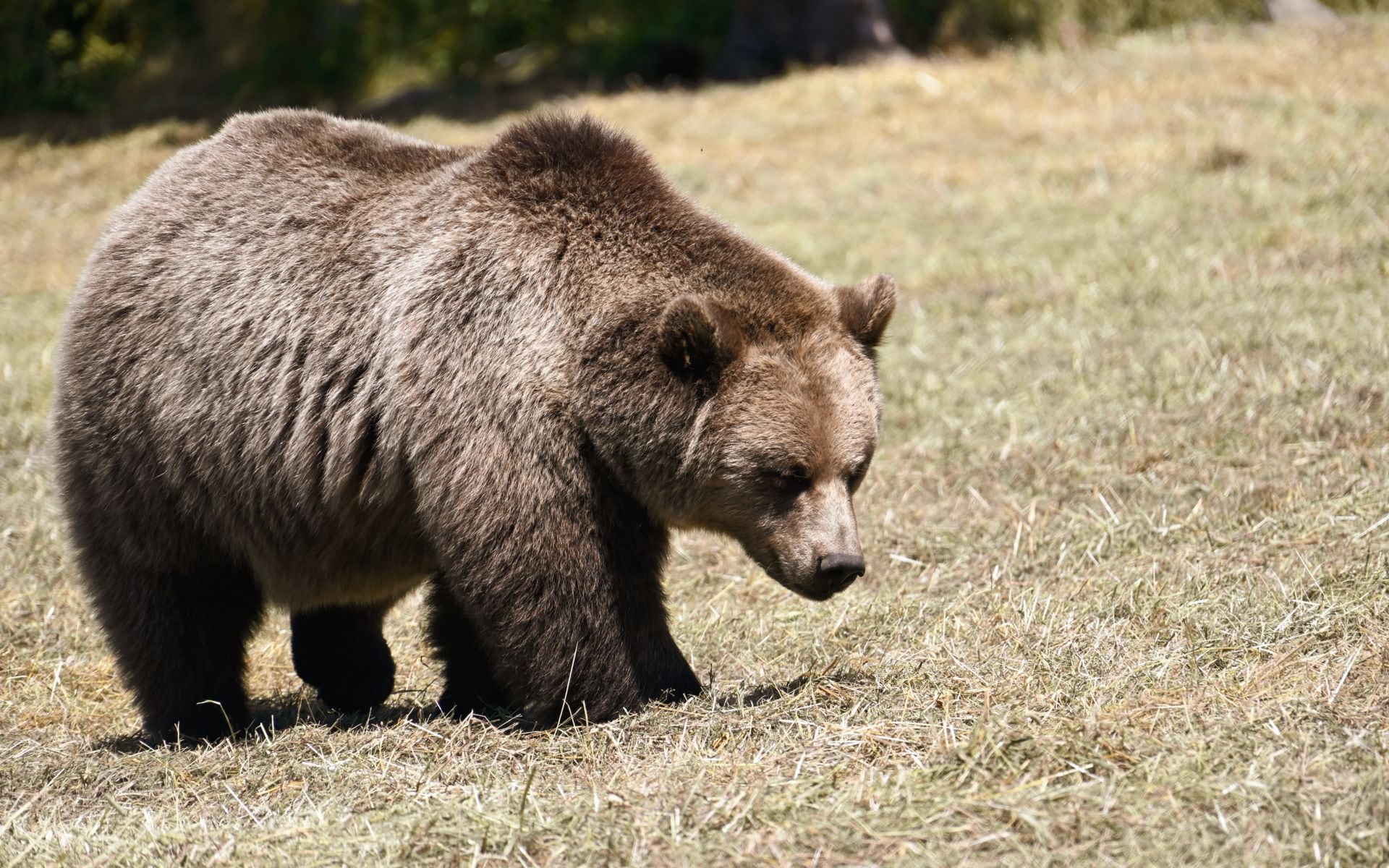
Montana has both grizzly bears and black bears, and the distinction matters because the correct response to an attack differs. Grizzlies have a pronounced muscle hump at the shoulders, a concave or dished face profile, and shorter, more rounded ears. Black bears have no shoulder hump, a longer and more straight-lined face, and taller ears relative to the head. Do not rely on color: black bears can be cinnamon or even blonde, and the two species sometimes share terrain in western Montana forests.
In Glacier National Park, grizzlies are common from the Many Glacier and Two Medicine drainages south through the Belly River corridor. The Going-to-the-Sun Road corridor sees bears regularly from late May through October. In the Yellowstone ecosystem, grizzlies concentrate along the Lamar Valley road in spring, particularly from mid-May through June, when they follow bison herds emerging from winter range and dig for early-season roots. Later in August and September, bears move to high-elevation whitebark pine stands and open slopes where army cutworm moths cluster.
If a grizzly charges, hold your ground and deploy bear spray when the bear closes to within 30 to 60 feet. Discharge in a wide arc at ground level in front of the animal. If contact happens anyway, play dead: face down on the ground, hands laced behind your neck, elbows out to protect your head, legs spread to make rolling you over harder. Stay flat and still until the bear has moved away. If a black bear attacks, the approach flips: fight back hard, as black bear attacks are more often predatory in nature.
Bear Spray: What to Buy, Where to Get It, and How to Use It
Bear spray is a pressurized capsaicin aerosol designed to create a cloud between you and a charging bear. Research comparing spray to firearms consistently shows spray is more effective at stopping a charge and results in fewer human injuries. UDAP and Counter Assault are two well-established brands available at outdoor retailers across Montana. Budget $40 to $60 (estimate) per canister at outfitters in Bozeman, Missoula, Whitefish, Gardiner, and West Yellowstone. Some outfitters near park entrances rent canisters by the day if you do not want to purchase one.
Airlines classify bear spray as a hazardous material. It cannot travel in checked or carry-on luggage, so if you are flying into BZN, MSO, or FCA, plan to buy a canister on the ground the day you arrive. Most outdoor gear shops in Bozeman and Missoula carry it year-round. Carry the canister in a quick-draw belt holster, not in your pack. An encounter can go from zero to a full charge in under three seconds; fumbling with a zipper ends any chance of getting it out in time.
To use it: pop the safety clip with your thumb, aim slightly downward at an angle in front of you rather than directly at the bear's face, and sweep in a wide arc as the animal closes. Wind matters more than most people expect. Reposition upwind of the animal if you have any time to do so. A full discharge lasts about seven seconds. After deploying, move away laterally and do not chase or follow the animal.
Bison, Elk, Moose, and Other Wildlife Hazards
Statistically, bison injure more Yellowstone visitors each year than bears do. The reason is almost always the same: people walk up for photos. A bull bison can weigh 2,000 pounds and sprint 35 mph. The NPS-required minimum distance is 25 yards (roughly the length of a school bus), and that feels farther than most visitors instinctively stop. If a bison flips its tail, starts pawing the ground, lowers its head, or turns to face you directly, back away immediately without turning your back.
Bull elk during the September and October rut are territorial and will charge. Cow elk with newborn calves in May and June are equally aggressive. Moose are solitary and unpredictable; in riparian corridors along the Gallatin River near Big Sky, the Bitterroot River south of Missoula, and in the willows around Flathead Lake, moose encounters are common from May through October. Moose look slow but are not. Mountain lions live across most of Montana's forested terrain and are rarely seen. If you encounter one, stand tall, open your jacket to appear larger, make noise, and back away slowly without crouching or running.
Wolves have re-established across Glacier Country and the Yellowstone ecosystem. They do not represent a significant safety concern for humans, but do not approach them. The Lamar Valley in Yellowstone's northeast corner is the single best place in the continental United States to watch wolves from a road, typically in the early morning hours of April through June and again in October and November.
Food Storage and Camp Safety
Proper food storage is what keeps bears from associating human camps and trail corridors with easy calories. In Glacier and Yellowstone, all food, garbage, and scented items including sunscreen, lip balm, toothpaste, and cooking gear must go into bear-resistant food lockers or hard-sided canisters whenever they are not in active use. Most frontcountry campgrounds at both parks have metal food storage boxes at each site. For backcountry camping in Glacier, hard-sided bear canisters are required in designated drainages; check the current-year requirements on the park's website before your trip, as the rules change periodically.
Outside the national parks, the standard in bear country is to hang food at least 10 feet off the ground and 4 feet from the tree trunk, or use a certified bear canister. Do not cook or eat in your tent. Keep a clean camp and pack out all garbage. The goal is not to keep bears out of the forest but to prevent them from learning that camp smells equal a meal. A bear that becomes food-conditioned typically ends up killed by wildlife managers rather than relocated.
Practical Tips for Day Hikers and Road Trippers
Hike in groups and make noise on the trail. Solo hikers account for a disproportionate share of surprise bear encounters because they move quietly and are more likely to startle an animal at close range. Talking, clapping at blind corners, and calling out before rounding a curve in dense brush all reduce the chance of a surprise encounter. Bear bells are a popular option, but they are only audible at about 20 to 30 yards in wind. Your voice carries significantly farther.
Check trail conditions and recent wildlife activity before heading out. Glacier National Park posts bear sightings on its website and at trailhead bulletin boards at Most visitors in the park, Many Glacier, and Two Medicine. Rangers at the visitor centers in St. Mary, Apgar, Many Glacier, and the Logan Pass area give current-day information on animal sightings and any trail closures. Yellowstone's visitor centers at Canyon Village, Mammoth Hot Springs, and Old Faithful post recent sightings and wolf pack locations on boards updated daily.
For broader trip timing in Montana, May through June and September through October are the most active wildlife windows. Summer crowds on popular trails and Montana's national parks reduce the chance of surprising a bear, since more foot traffic means more noise. Plan your park reservations and trip budget well ahead for peak summer, as lodging and campgrounds at Glacier and Yellowstone fill months out.
Frequently asked questions
Is bear spray required in Montana national parks?
Bear spray is not legally required, but it is strongly recommended by the National Park Service and by practically every wilderness ranger at Glacier and Yellowstone. Carrying spray and knowing how to deploy it is the most effective safety measure for backcountry travel in Montana. Rangers at park entrances will consistently remind you to carry it, and many outfitters near the parks sell or rent canisters.
What should I do if I see a bear from my car in Yellowstone or Glacier?
Stay in your vehicle if the bear is close. You can watch from a safe distance with windows cracked, but do not get out. Bear jams, where multiple cars stop at once, are common in both parks. The 100-yard rule still applies even from a vehicle; do not inch your car closer to the animal or block the road. Pull fully off the pavement when possible.
Can I hike alone safely in Montana?
Solo hiking is possible, but the risk of a surprise bear encounter is meaningfully higher when you are alone and moving quietly. If you hike solo, carry bear spray on your hip in a holster, make more noise than you think necessary, check trail reports before you go, and leave your route and expected return time with someone who will follow up if you do not check in. Glacier Country trails, particularly in the Many Glacier and Two Medicine areas, have some of the highest grizzly densities in the lower 48 states.
What wildlife is dangerous vs. just surprising to see?
Grizzly bears, black bears when they act predatory, bison, bull elk during the rut, cow moose with calves, and mountain lions all warrant real caution. Wolves are not a significant safety concern. Most other Montana wildlife, including deer, pronghorn, bighorn sheep, and eagles, are not dangerous as long as you do not corner or approach them. The animals responsible for the most actual visitor injuries in Montana's national parks are bison and, less frequently, bears that have been surprised at close range.